Transcript
Dave: Hi, John. Cogir Rancho Cucamonga. Right?
John: That’s correct. Yes.
Dave: Did I pronounce that right?
John: Yes. The only time it’s mispronounced is if you have a British speaking someone on Google. Though you can get people with different accents on Google, and they can never pronounce Spanish names. Correct?
Dave: The artificial intelligence that really isn’t that intelligent?
John: Exactly.
Dave: So that is, I guess, San Bernardino County?
John: Yes.
Dave: Okay. Close to La La Land, close to Hollywood. You look like an actor, John.
John: My son’s an actor. I’m an architect. It’s a completely different thing.
Dave: Well, let’s start with your son. Tell me about your son, the actor.
John: He went to UC Riverside with, got a degree in theater and TV, And, he’s worked his way through it’s very difficult to plot a career path in that business. He is doing what he’s always wanted to do now. He’s directing teams for the voices for video games and anime movies.
Dave: That’s a huge industry right now.
John: Well, yes. I mean, from an income point of view, video games are where the money is.
Dave: Sure. So is he a techie as well or a director and actor only?
John: He’s a director and actor, but, of course, he uses a lot of tech. He just finished doing a program where the lead voice actor was in Scotland, And he’s in Los Angeles, other people are in New York, so you have to get all the time zones coordinated so everybody can work together at the same time frame.
Dave: So Interesting. Recently, I interviewed Seth MacFarlane, and I was asking about doing voice work. And I said, is that easier because you’re not on camera? He said, no. It’s tougher because you don’t have the visual aid.
John: Well, what he’s doing, a lot of what my son is doing is dubbing Korean and Japanese films and video games.
Dave: Oh, boy.
John: And so he has to watch them in Japanese to get the you know, understand the inflections and all this. And then, of course, it has to be dubbed so that it looks like people are actually speaking English.
Dave: Does he understand the language? Does he–
John: No. But he understands the emotion.
Dave: You guys grew up around show business. California, your son grew up in California.
John: Yes. Well, both our boys were born in Wisconsin. We lived in Wisconsin from ’66 to ’80. And, in 1980, we returned to California, and so he was, well, 1980, I think he was 11 or so. And then, so he went through middle school and high school and college. We were living in San Diego.
Dave: Got it.
John: And, and then the week after we finished college, we moved back to Northern California. I’m from the Bay Area originally.
Dave: So I wanna get back to Wisconsin, but before we get off the showbiz stuff, Rancho Cucamonga, that 70 show. I don’t know if you ever saw it. It was filmed in Rancho Cucamonga.
John: I know about the– I had I didn’t really watch it very much. I didn’t know it was filmed here. I moved when I finished college, which was in the military. I moved to LA in the fall of ‘63, and I had a reserve. I was in the Air Force Reserve, so I had monthly meetings in Riverside. So I would drive through Rancho Cucamonga. And it was all vineyards, and it was also either a Johnny Carson joke because it had a funny name. Cucamonga had a funny name.
Dave: I remember that, and I also remember, and I’m sure you do too, being a young man in the nineteen sixties, Frank Zappa. He’s from Rancho Cucamonga.
John: I didn’t know that. And in Rancho Cucamonga is interesting because they effectively built a brand new city, modeled somewhat on Irvine, because Irvine was really the first brand new city in California. And so, the roads work, the utilities work. I mean, it’s beautifully landscaped. And 175,000 people live here, which really surprised me. It doesn’t feel that size.
Dave: The populated area around San Bernardino County is millions.
John: Well, that’s now called the Inland Empire. When we lived in Poway, which is near Rancho Bernardo in Northern San Diego County. And, Temecula, you know, was just country when we lived there, and then they started putting in vineyards and that kind of thing. And then, of course, there was this huge huge boom in construction for housing and all the rest just to accommodate all the population.
Dave: I remember when Temecula was considered cowboy country.
John: It was. When I lived in the area, it was.
Dave: And the area that’s really, just exploding right now is around Indio and Palm Springs with Coachella and Stagecoach, that entire area, the population is just booming right now.
John: Well, it’s more cost effective.
Dave: Yeah.
John: For sure. And, it’s been developed enough that there’s lots of things to do there. And, when we were, we’d lived in Northern California for twenty five years, and then we wanted to move back closer to our son. And it was either the mountains or the desert. Right. And so, the mountains were closer. And so now that we’re here, we lived in Lake Arrowhead, which is 40 miles from here. His house is 40 miles from here in LA. So, it’s a very convenient location, easy to get to places.
Dave: Bay Area, where I’m pretty familiar with it, John. Where were you in the Bay Area?
John: I lived in Millbrae, which is near San Francisco International Airport.
Dave: Absolutely.
John: And went to the San Diego unit San Mateo Unified School District is, San Mateo to San Bruno. And in the forties and fifties, everything was available. If you were wanted to apply yourself, almost everything was available. So it was a great place to go to k 12 school.
Dave: So you mentioned that you’re an architect, and you mentioned Milwaukee, Wisconsin, but I didn’t hear any accent because you’re California based.
John: I’m from the San Francisco Bay Area.
Dave: Right.
John: And we all sound like radio announcers. We have no accent. And we moved to Milwaukee, and, my wife’s from Michigan, and people round their vowels. So and and it just sounds different. And then, of course, their diction is a little not really not that great. So, but, you know, it was interesting because in the sixties you’re young in the sixties in LA, and there’s all this role playing and this kind of thing. And you moved to the Middle West, and either people liked it or they didn’t. It was really refreshing. So, it was a good experience for us.
Dave: Young in the sixties, and you mentioned California, LA. Is that where you met Mary?
John: Yes.
Dave: How many years married now?
John: Sixty three. She decided she wanted an adventure living in Grand Rapids, Michigan, and she decided to try living in Southern California. So she moved there in the fall of ‘63, and I moved there in the fall of sixty three. And then we met at a young adults group at Emmanuel Presbyterian Church in Wilshire Boulevard, and one thing led to another for the next year or so, and we decided to get Macquarie then. We stayed there another year, and then decided we needed an adventure. My sister lived in Washington, DC, but there was a recession on both coasts. The architecture profession, except for certain specific building types, is feast or famine. An opportunity came from Milwaukee. I got the job on the phone.
Dave: Were you like’ Milwaukee?’ Snow, freezing. Why do I wanna go to Milwaukee?
John: Well, I didn’t move there for the weather.
Dave: Yeah. Right.
John: But, it’s inter Milwaukee is interesting because it’s on the West Side Of Lake Michigan, so you don’t get lake effect snow. And as a result, it gets bitter cold the January for about two weeks. It was nice to have four seasons. The weather really doesn’t bother me one way or another. And so it was just part of the adventure. And, I worked for a company that did schools and industrial engineering type of education buildings.
Dave: You were commercial. Right, John? Commercial architecture?
John: No. It was institutional. Not commercial. Then moved from that into hospitals. I was working for a firm that had many offices in The United States, and as a result, they got kind of once in lifetime projects. So we did the first urban national park in Indiana Dunes, we did a museum in Washington, we did a school district in Wyoming, you know, those kind of things. And we were the master planners for a medical center in Milwaukee, and, an opportunity came up to work with the team that was doing a brand new 300 bed hospital, so I went with them. That really got my foothold in hospital design.
Dave: What a career. You’re way too smart for me.
John: Oh, I don’t know about that.
Dave: Oh, I guarantee it.
John: I’m sitting in this chair, but you’re sitting in that.
Dave: And that proves it that you’re smarter than I am.
John: So, anyway, our oldest boy had health issues that couldn’t be dealt couldn’t really couldn’t be addressed effectively in Wisconsin. And so, an opportunity came up in San Diego, and UCSD Medical Center had the services that he needed. And so and I was 40, and I had ants in my pants and so professionally. And so we made the move, and, and it was a smart move. And that’s where my wife got interested in horseback riding and had things that she liked to do.
Dave: Tell me about you and Mary and stuff that you like to do together. And, John, tell me the secret of sixty three years. I heard that you were married in
John: Sixty five.
Dave: Oh, I was thinking 1963.
John: No. Oh, no. That’s what we meant. No. We were married in ’65. K. So ’60.
Dave: Wow. Okay. Congratulations.
John: Well, you know, if you look at life as an adventure, marriage is part of that. And we were a good balance for each other because I had confidence in my professional abilities, but not in my social skills. And my wife was the opposite. She had terrific social skills. And so it made a good combination for us. She’s very outgoing and it’s you know, she meets people easily, this kind of thing. And then when we moved to Wisconsin, she was more at home because the environment was similar to what she had grown up with in Michigan. Her folks were six hours away, and we’d see them every couple of months. And then it took us a little while, and our first child was born four years after we married. And then three years after that, we had our second boy.
Dave: The sixties. Were you a hippie?
John: No. No. No. You know, it’s interesting you should ask that question. I graduated from UC Berkeley Yeah. January of ‘63. There was a whole attitude for young people that carried over from the Kennedys when the Kennedys were in office. And after that, well, I graduated in January, went in the military for six months, moved to LA in September, and in November was JFK’s assassination. After that, things started really falling apart. And quite frankly, I didn’t really understand that because you had all these kids that had grown up in a really terrific time. I mean, after the second World War, they were too young for Korea. You know? But I talked to a friend of mine who went back to Cal for a master’s in ’65, and he said, I would not have recognized the campus. That’s when they were having all the
Dave: Protests and
John: All kinds of political nonsense.
Dave: Nom era protests, you know, coming up on the summer of love in ’69 just after you had your second child.
John: Well, we were in the Middle West, so they didn’t impact us that much.
Dave: Right. But, But UC Berkeley, if you had to put a pin on a map and say this is Hippieville, that would be it.
John: There’s one thing I can always tell you is that majority of people who were protesting were not students, and that in the fall, the stadium was 50,000 people full every Saturday. And so, it wasn’t a unique, you know, a whole shift. So I was kind of lucky because I was ahead of that curve before all those kinds of things happened. The other thing that happened in architecture is that they decided to teach sociology for ten years in part because of that and throughout, colleges in California. They were teaching sociology instead of design, and so when I moved to LA, or I moved to San Diego in the 80s and was trying to hire people, the only ones with design skills were from Cal Poly San Luis Obispo. Because everybody else, you know, was in tune with, you know, the mood of the day, well, that isn’t gonna that isn’t gonna help you when you’re trying to create these buildings to support people. So Yeah.
Dave: Fun stuff.Take me back to nineteen sixty five, sixty years ago, the year that you and Mary were married. Fun stuff. What music did you enjoy together? What was your favorite music then?
John: We liked to dance. And one of the things we really enjoyed when we were in LA was they had a lot of these small bars that have bands and a lot of Latin music and Latin dancing, that kind of thing. And we loved that. That was a lot of fun. And then when we moved to the Middle West, people liked to party.
Dave: Yes. They do. They drink some beer in the Middle West.
John: And my father-in-law, god bless him, made terrific Manhattans. And so, and, of course, we lived in Milwaukee where either you’re Catholic or you’re Lutheran. And so, on Friday nights, you know, there were fish fries and all kinds of activities for the weekend, and it was easy to have a vital social life. And so we enjoyed that very much. And then, after I’d been there six years, I guess, my office, the office I worked for, had a branch in Appleton, in the Fox River Valley, 20 miles from Green Bay where the Packers are. And so we moved there for a couple of years.
Dave: Tell me about the community, the Cadence community, Cogir community in Rancho Cucamonga.
John: Well, for a number of reasons, my wife was unable to walk, and it was part of a neurological illness that she has. And so we went through the home health and all these other kinds of things in Lake Arrowhead, which is a lovely place, but it’s, you know, it doesn’t have the population to support a lot of health care, home care things. We contacted A Place for Mom, A Place for Mom gave us a list, and Cadence was on the list. My son and I interviewed Seven, and talked to Willie here and turned it down to three, and we went to one for our breakfast, and then we went here to Cadence for lunch. Willie and Cynthia touched on every single thing we were interested in, concerned about, all that kind of thing. We took a tour of the building, and then we went upstairs to go see the apartment.
Dave: Yep.
John: And there’s a lady here who’s a very skilled watercolorist, and she just happened to be standing by her door with all her display of her lovely paintings when I walked by, and so she introduced herself, and I had a chance to visit with her, and of course she’s very interested and supportive of the community that we have here. And then we went to look at the apartment, which we decided we’d flip the way it was furnished so that the living room and dining room would become the bedroom because, at the time, we had a big electric king-size bed.
Dave: Yeah. It’s your choice that you configure the apartment.
John: Right. And that way, the caregiver could come in right over to the left side of the bed.
Dave: Oh, nice.
John: Worked well for all those things. And then the bedroom became, you know, the TV, dressing, library, just all that kind of thing for me.
Dave: And, John, that had to bring comfort to you having care right there for Mary when needed.
John: Well, I’ll tell you the, well, number one, you have I mean, of all the places you went, you have by far the best marketing team, period. Cynthia came to visit us at lunch and gave us a list of places where we could turn our country dog into a city dog. She turned my wife’s wheelchair around to meet a whole group of ladies, please reaching and putting and grabbing their hands. So, that made a big difference, that now that we’re here, the dining room’s great, the people are friendly, and the caregivers are very, very good, and we’ve been very pleased with that. And when we reached the point that we had to use, we had to go to appointments outside, then Michael was there with the van to take us. That worked out, you know, very comfortably for my wife, and he’s a great guy. And so, we really feel at home here. Now, we have been here eighteen months, and, for the last year, my wife has been in hospice over here. And that was a seamless integration with the hospice people. And they also use the med techs. I was handling the medication. So now that she’s in hospice, the med techs here provide the service. She’s now on a liquid diet in the last week, so the fellow who’s in charge of all the aids talked to the hospice people, and they’re providing all the food service for her now as part of that service. So, the whole seamless thing has been made it effortless for us. The big thing for us is we were gonna leave a house, a particular lifestyle, and then move here. And we decided the best way to do that was to do, more or less, everything at once, rip the Band Aid off, and just do it.
Dave: Change. Change.
John: Well, there are people here that I’ve become friends with that are doing it on an incremental basis. I think that would’ve been very hard for us. We put the house on the market. It sold in four months, which was important because we used the profit to invest that so that we could have income to afford to live here. It’s satisfying here, even though there’s not the big house and all your local friends. I mean, we’ve met friends here, I’ve met a lot of very nice people here. And so, the thing that I’m concerned about is that as my wife fades, I don’t wanna be isolated, and that’s one of the benefits here is that you don’t feel isolated. They have a lot of activities, and I haven’t been going. I go to exercise because I need it.
Dave: Me too.
John: And it works. I have been going to a lot of other things because I’ve been busy, you know, take with you know, just being with my wife and things like that. But I will start doing more and more of those things, especially now that she’s on a liquid diet. I’ll be taking all my meals downstairs to the dining room, which will be nice. Before I was picking up lunch and dinner and taking it up and preparing it for her and eating it up and all that kind of stuff. So, I think the transition is inherent here As things become less and less involved with her, I’ll have opportunities to meet and do more things with
Dave: I think so too, and I’m happy for you. Cadence, Rancho, Cucamonga, a Cogir community, John, our heartfelt best to Mary. And in the dining room, knowing your Milwaukee background, I have to ask, do they have bratwurst, Schlitz, old Milwaukee, and Pabst?
John: No.
Dave: That might be a good thing. Well, John, I enjoyed talking to you. Again, sincerely, our very best to Mary to you both.
Summary
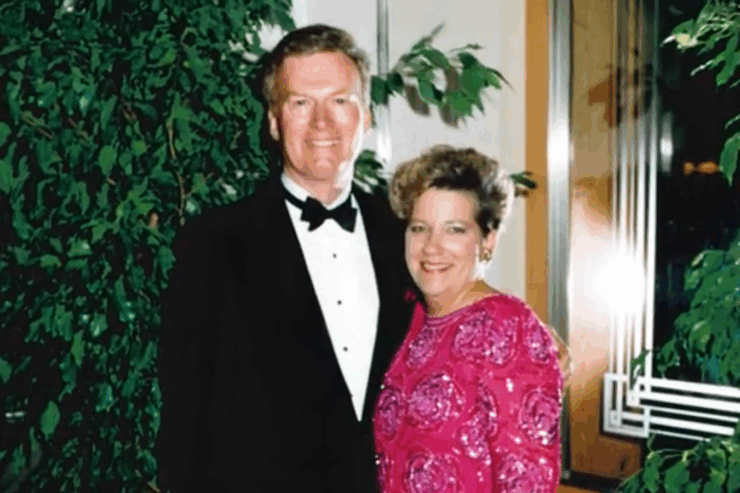
John, a resident at Cadence at Rancho Cucamonga, shares his life’s story of as an architect, husband, and father. Married since 1965, John reflects on his and Mary’s early years in California, their time in Wisconsin, and eventually returning west to be closer to family and needed care.
With a background in healthcare architecture, John speaks thoughtfully about choosing Cadence at Rancho Cucamonga as a supportive environment for both him and his wife. From seamless access to care and transportation to the friendly staff and welcoming community, John describes how Cadence has made a difficult time more manageable and comforting.
He also shares insights into his career, his son’s work in voice acting, and the small joys that come from staying active and connected. His story is a moving example of how thoughtful planning and community support can make a big difference later in life.
Liked what you read?
Spread the word!
Share
Related News
Senior stories by Cogir: Susie Schaefer
Transcript Dave: Susie, Claudine. How are you?Suzie: Hi. Great. How are you? Dave: Good. I’m glad that you got those beautiful flowers that I sent you. Claudine: You notice those back there?…

Cogir of South Bay celebrates grand opening
TORRANCE, Calif. (Oct. 21, 2024) – Ryan Companies US, Inc., a national commercial real estate solutions provider, and Cogir Senior Living announce today the grand opening of Cogir of South Bay. The resort-style…
Thrive at every age: the benefits of active senior programs
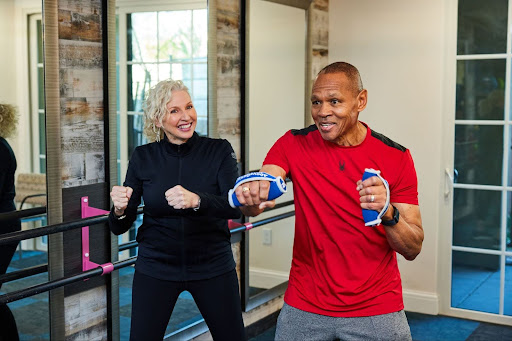
Staying active is vital to longevity. Simple activities and exercises can boost physical and mental health, helping us feel good inside and out. But it can be hard to start and keep up a new habit, especially…


