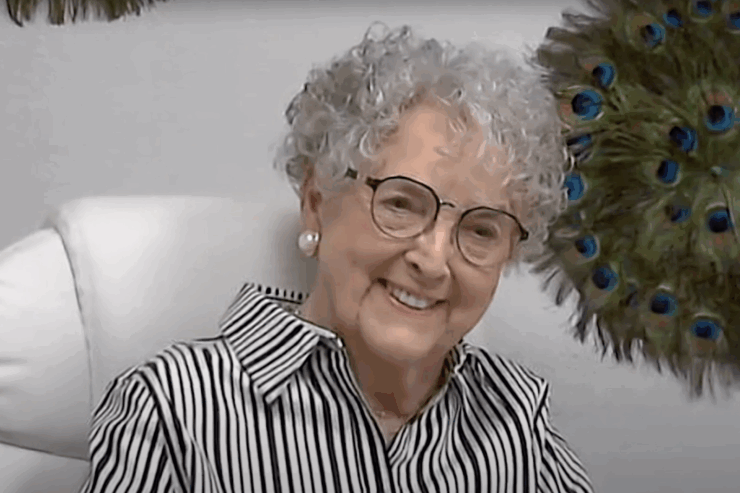
Transcript
Dave: Hi Barbara
Barbara: Hi
Dave: Do you go by Barabara or Barb?
Barbara: Oh, either one is fine.
Dave: Okay, so you’re at Cogir of Sonoma?
Barbara: Yes.
Dave: And I recently talked to your friend Marge, and I understand that you ladies have been running a gambling ring — blackjack — behind-the-scenes tournament there at Cogir of Sonoma. Is that true?
Barbara: We don’t run it — we’re participants, though. And I think I have an edge over all of the players because my father was obsessed with gambling.
Dave: Really? And what type of gambling did your father love?
Barbara: His first love was horse racing — he always said it was the sport of kings. And then he liked to play craps.
Dave: Do you follow horse racing?
Barbara: I do not. When you grow up with a gambler, Dave, you kind of walk away from it, you know.
Dave: Got it. And then his daughter turns out to be in the FBI.
Barbara: You did your homework.
Dave: Oh, I’ve been reading about you, Barbara, and I have so many questions. Can I ask you about that?
Barbara: I’ll try to answer them.
Dave: Okay, so I’ve always wanted to question somebody in the FBI. I’ve always wanted to turn it around, so this is my chance. Around what years were you in the FBI?
Barbara: I was hired in 1953.
Dave: Okay, and a stenographer?
Barbara: Yes.
Dave: For those who may not know, explain the job of a stenographer.
Barbara: I would go into work each morning, and my supervisor would give me my schedule for the day. The schedule consisted of meeting with agents that had been out on investigations and needed to get their investigation on paper and in file. I would go to their office, they would dictate the investigation to me, and I would return to my office and transcribe it on paper for the file.
Dave: So Barbara, what was that like? Because I’m sure some of the investigations were pretty serious, and secrecy was a big deal. Was there pressure involved with that? I mean, you’re a stenographer and you’re recording what happened, but you still know everything. Did that become common for you, or was that unusual?
Barbara: Well, I was fresh out of high school, Dave, so I didn’t do much questioning — I did obey. I did what I was told. One thing we were told was if we saw an agent on the street that we recognized — and you could not recognize every agent that was walking in the vicinity of the building because they had to wear suits and they had to wear fedora hats, that was Mr. Hoover’s edict — all agents would wear a hat — we were not allowed to look them in the eye or speak to them because that would put both them and me in danger.
Dave: Okay, so you felt like a spy. I thought that was just a television thing — that agents wore suits and the fedora hats. But you couldn’t be walking down the street and go, “Oh hey Bill, how are you, good to see you.”
Barbara: Yes.
Dave: As a stenographer, when you would account for these cases, were you typing or shorthand?
Barbara: All shorthand. All shorthand. All the offices were locked, so we had a key that opened all of them. You could not take any files or your stenography notebook into the restroom, for instance. If you were leaving an agent’s office and thought you’d stop at the restroom on the way to your office — uh-uh — you went to your office, dropped off your files, and then went to the restroom.
Dave: Was there any story — and I’m sure you dealt with every type of case in the world — but was there any story that was so dark that you kind of took it home with you in your head?
Barbara: There were many like that. This was during the days of communism, and so there were times when I knew the people that had been investigated. I did not know that they were communist and that they were subversive. There was enough of that to shock a young girl.
Dave: And with the FBI, that was mafia days — and San Francisco, of course, was always active in that area as well. What about shorthand, Barbara — is that a skill that just wasn’t passed on? My mom did shorthand and I was always so impressed with it. That’s a real skill. Have we lost that over the years?
Barbara: Yes, we have. Electronics has taken that over. But I found it to be very helpful in every aspect of my life. If I go to a doctor’s appointment and he’s giving me information, I will write it in shorthand so I get every word. I take phone messages in shorthand. Once a steno, always a steno.
Dave: So you make notes to yourself in shorthand?
Barbara: Depending — sometimes, yes. That’s almost cryptic because nobody else can read it.
Dave: That’s very true. Tell me more about Barbara. Tell me about growing up in South San Francisco — which is different than San Francisco. It’s a smaller community. It seems like when I would land at the San Francisco airport, that was South San Francisco.
Barbara: No, that was San Bruno.
Dave: Okay.
Barbara: Because I remember seeing the big “South San Francisco, The Industrial City” lettering.
Dave: Right.
Barbara: It was right on the edge. The airport now has expanded — it probably has spilled over to South San Francisco. I moved there when I was 9 years old. My father… we had very little. I grew up right at the poverty level. But my father had had a good night at the casino, and at the time there was a local builder named Dolier. It was right after World War II, and he built these modest tract homes in South San Francisco. If you were a veteran, you could qualify for as little as a $500 down payment, and you’d have a home. My father did not serve in the military, so he did not qualify — but there was also a caveat: if your health was bad and you needed the air of South San Francisco — mind you, it’s an industrial city — they would consider your application. I was born with asthma, my father thought like a gambler. He said, “Barbara, you’re going to apply for the home using your asthma.” Fast forward — the application was accepted. On the way to the interview, my father said, “Now Barbara, when we get into that man’s office, you must wheeze.” I felt tremendous pressure to wheeze.
Dave: So not only can you do shorthand, you can wheeze on cue.
Barbara: Well I didn’t think I could but at nine years old I did it and we got the house.
Dave: I was having fun with the gambling thing, but it sounds like your father did that for a living.
Barbara: Well, he did. The best thing that happened in our house was World War II — because my dad was eligible to be drafted but decided he wasn’t going to go. He researched exempt jobs, and one was at Hobbs & Wall, a lumber company contracted by the Navy and Marine Corps. My father went down to apply for the job, they asked him all kinds of questions that he lied about, but they didn’t ask for any proof so he got the job and he was exempt from the military because he was driving a truck up North in the Eureka area to the logging camps and bringing lumber back down to be plained and prepared to be delivered to Mayor Island.
Dave: What an interesting era for you to see ships coming in and out of the bay during WWII. And the stories that they would carry with them and the families greeting ships that are returning and the pageantry but also the sadness. What an era to live in San Francisco and the height of Alcatraz. Correct?
Barbara: Yes.
Dave: Did that ever turn your mind looking out there going, “The most dangerous criminals in America are right there”?
Barbara: Never thought about it when we lived there are all. Felt very safe. San Francisco was very patriotic during the war. Mothers hung gold stars in their windows, everyone had a flag. We practiced lights out at night. My father was an air raid warden, going around knocking on people’s doors if even a little bit of light shone through. It was very sad, as you said, but a very interesting time. Food stamps. As a child, I was very hard on shoes. You were only allowed one pair of leather shoes every 6 months. I would wear mine out before the six months was up. And some genius decided you could make shoes out of compost paper and they were a terrible orange color. I had to attend school in cardboard shoes.
Dave: I’ve never heard that one before. How about the ’50s music? Were you into Elvis, Bill Haley, and The Comets and the 50s swing music?
Barbara: Yes, I was. Jitterbugging was my big thing. My single aunt taught me, and I found myself a very nice boyfriend in high school that loved to dance. We were that couple.
Dave: I asked your friend Marge, who’s also at Cogir of Sonoma, the same question and I’m just curious: What do you love about living at Cogir of Sonoma?
Barbara: Number one would be the socialization. There are so many great accomplished, bright, interesting people that are happy to meet you and happy to share their stories. And I am a storyteller. I’m a sponge, I just absorb it all. And thanks to Marge, who recruited me for our Cogir Chronicle newspaper, I have been allowed to learn and grow and put my stories to print. And I’m very proud of that.
Dave: Oh I love hearing about that. And Marge mentioned something interesting. I asked her about the dining room and she mentioned she loved talking to some of the teenagers working in the dining room. And I’ve always felt from different generation that they can learn from each other. And you and Marge are so well spoken . Do you find yourself communicating with those teenagers? Sharing stories, and you’re a story teller, from your generation , but also hearing about their generation and what’s new and what interests them?
Barbara: Well they are really working hard. They don’t have much time to chat and we respect that. So I don’t talk about my stories. If I have a chance to have a few words with them, I want to know their story. And each one of those kids, they’re my kids, are eager to share their personal life. Some of them have a really tough life and they’re looking forward to making a better life for themselves. And that’s wonderful that our chef here gives them that opportunity
Dave: It is and we’re doing this visit on a Friday. And I hope you and Marge have a wonderful weekend. And Barbara, you and your friend Marge both. I’ve sincerely enjoyed taling with you and I wish you the very best.
Barbara: Thank you and thank you for the opportunity.
Dave: And now I have a connection to the FBI.
Barbara: You can say you knew a woman in the FBI. Yes, if you want.
Dave: If you ever want, Barbara, we’re friends now, short hand me a note. I won’t be able to read it, but I’ll smile.
Barbara: I Might do that. Goodbye.
Dave: Goodbye.
Liked what you read?
Spread the word!
Share
Related News
Boutique, luxury senior living
Luxury, boutique living reflects a growing shift in how older adults and families think about care, comfort, and daily experience. While the senior living industry offers a wide range of wonderful options…
Why private pay senior living offers more value than you think
Listen here Many families begin their search assuming private-pay senior living is too expensive. That reaction is common, especially when you are comparing options or researching the cost of senior…

Heartfelt holidays: Easy recipes for seniors, lasting memories
With the holidays right around the corner, there can be a lot to prepare for. Whether it’s shopping for presents, decorating the house, or deciding whose house to go to for what, there is always something…