Summary
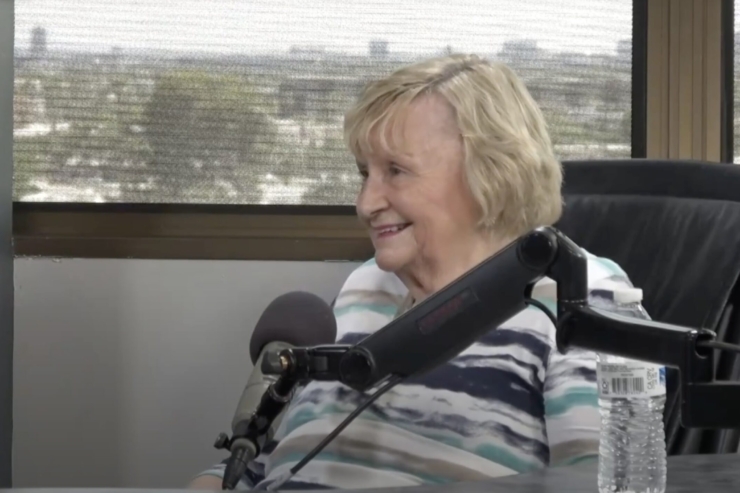
Connie Lewis, a resident at Acoya Troon in Scottsdale, Arizona, shares reflections on her vibrant life—from growing up in small-town Iowa and fostering children with her late husband to finding her passion for watercolor art in retirement. Now teaching art and staying active at Acoya Troon, Connie highlights the warm, welcoming environment, full schedule of activities, and the independence she enjoys while living at a Cogir community.
Transcript
Dave: Today, we have Connie Lewis from Acoya Troon. Hi, Connie. So tell me all about Connie Lewis. You were born in 1939. Start there in Iowa
Connie: Do you have to say my age?
Dave: Yes. Because you should be proud of it because you look gorgeous, and you’re still rocking and doing great. You’re driving. You’re happy at Cogir. I mean, life’s pretty good for Connie Lewis.
Connie: It is. I’m very blessed. I love it there. I love Cogir, or Acoya, which is the name of the place where we live. I see the pinnacle peak out my back, and I see the city lights at night, and it’s beautiful. And the staff is so warm and so inviting, you would not believe it. And we have every activity there could possibly be. We have dinners. We have theater. We have drama. We have music. We have speakers that come in. We have every game there ever was. It’s just a wonderful place. The residents are all very friendly, and it’s small enough so that you can know everybody.
Dave: Sure.
Connie: And I like that. We have a grill upstairs, and we have a dining room downstairs, which is really nice. So we have our choice where we wanna eat. They provide three meals a day, and it’s just that I love it there. I decided not to go with my children, let them have their lives, and I could have mine. So I stayed here in Arizona. Children are across the country.
Dave: So talk about that decision because I think that that’s really something that Cogir is very, very proud of is when residents go to Cogir, for a lot of them, new friends develop, a new life develops, but you still get to do things that you love. Like, I know you’re an artist. Talk about that.
Connie: Well, I didn’t start art until I retired, which was in ‘ninety six. And I took lessons from a gentleman here in the valley, a Spanish man who had had a lot of art experience. In fact, he painted a lot of the buildings in Phoenix and some of the bar walls and things.
Dave: And like some of the murals? What you’re talking about in Downtown Phoenix?
Connie: Yes. Okay. And, usually people, Spanish, Hispanic people. And he taught me drawing and all the different forms of art, and so I started just with oils, and I started to get headaches, so I switched to watercolor, and I’ve been in watercolor ever since. And I love it.
Dave: So explain that to me because I’m a little bit of a rookie when it comes to art. Alright? In fourth grade, I couldn’t make a papier mache dinosaur, so I’m not a mister artist. Yes. Why would you get headaches with oil paintings and not watercolor?
Connie: It’s an oil based paint. So it has a smell and then they use turpentine to clean it. And in those days, they didn’t have turpenoid yet, which is something that you can use now that’s odorless. But I just fell in love with watercolor because it moves on the paper, and you have to be a pretty good artist to do it because there’s not much correcting. So I teach that in Acoya, and I have, like, seven or eight students now, people who are just starting out, and they love it, and I love doing it.
Dave: See, some of that oil painting smell, that’s really what brought the great music from the nineteen sixties and seventies around. I think that’s when people started getting into Pink Floyd because some people got headaches. Some people just got creative in the art world with that. You went watercolor.
Connie: Yes.
Dave: And not only do you still do watercolor, you teach others.
Connie: Yes. Yes. You know, I have a couple of students that are blind, and they are doing abstract. They’re able to see enough to where I can help them with their colors and they can do abstract painting. So they are just something that they just love. They’re proud of what they’ve done, you know.
Dave: But how do you learn to teach that? That’s a whole different level.
Connie: Patience. Lots of patience.
Dave: Speaking of patience, I know you’re a mother because you mentioned that you had kids. And together as a family, you decided to come to Cogir and let your kids have their own life. Talk about that decision. Was that emotional? Were your kids originally on board?
Connie: My daughter would have liked me to come to North Carolina, but I said, you know, you’re just retiring. You don’t know how many years you have because I lost my husband in 2012. And so, he was only 74 years old and died of cancer. So I said, you know, you need your lives. You need to enjoy those years we had. He retired in ’50 at 58, so we had several years together. You know? So I told him I didn’t wanna interfere with that. I wanted them to live their lives, and I was happy here. Happy. I love Cogir.
Dave: So talk about your husband and your family business. And, growing up in Iowa, what did you guys do for a living? What was the family business?
Connie: My father started out as a merchant in a five and dime store. And we, as kids, worked there. We helped him with it, and every Thanksgiving, he would deliver turkeys to families in town that didn’t have anything. And he made us learn the giving part of it — you know? And at Christmas, we would wrap presents, toys, and things, and he would drop them off on their porches, and so I had a good teacher, a lot of good teachers coming up those years, and I married a wonderful man, which continued my life. So fortunate. And we moved to Indianapolis from Colorado. And we were there, and we didn’t know many people. So we saw an article in the newspaper about these kids that didn’t have any homes. And they’re foster kids through the correctional system. So we thought, well, we’ve got two young kids of our own. We’ll just see, you know, how this works out. And we applied, and the correctional officer that came out to the house said, well, it’ll be a year till we get you approved. Well, within two months, we had a placement, a girl 18 years old, and we put her through school. And I could write a book — but we had four children we took in during those years. And, we adopted one of the boys. We got him at nine, and we adopted him at 10. And he was a wonderful, wonderful man. Unfortunately, he smoked and he died at 55 of a heart attack. So… we’ve lost him, but he left his family. And they’re here in the valley, so I see them.
Dave: Do you think about having a foster family and go back to your father and the love that he gave and the way that he brought you up, giving to others as being an inspiration?
Connie: Yeah. And my mother too.
Dave: And your mother.
Connie: She was a very loving, sweet woman who was only interested in raising her children. She had four. I have three brothers, but I was the apple in my dad’s eye, of course.
Dave: 2Of course. And the child that you adopted, talk about that.
Connie: I’ll tell you a story about him. He would not give his love to us when he first came.
Dave: How old was he?
Connie: He was nine. Okay. And our children were six months younger, nine, and a younger one, seven. And he came, and he put his love into our dog. It was a schnauzer. And he loved that dog, and she got out on the highway and got killed. And I could see him. I can remember I see him every day hitting his hands on his knees saying, “Everything I love goes away.” And it just broke my heart, so I said to my husband, “we gotta go out today and get a new puppy.” So we went out that day as a family and got a new dog. And he eventually warmed up. He tested us a few times, like, trying to set a fire in a barrel in the garage and just different kinds of ways of testing our love. And he said, “are you gonna send me back?” And we said, “No. We’re a family. We’re gonna work through this.” So, you know, he really is a beautiful child. We loved him a lot.
Dave: You are an angel. Do you know that? When I go out to Acoya Troon, it’s gonna be easy to find you because you’ll have a halo on.
Connie: I have horns.
Dave: No. I don’t think so. So, Connie, just sharing, back and forth. I have three adopted brothers and sisters.
Connie: Really?
Dave: I’m not adopted, but we were all raised as one. And we used to laugh together because when we would meet people, they would tell us how much we look alike, and it’s obvious that we’re brothers and sisters, and we never corrected them. I never think about them being adopted until the topic comes up.
Connie: You were not adopted.
Dave: I wasn’t adopted. I was the only one that wasn’t adopted. But I think of us all as blood. I never separate at all until the topic comes up, and then I’m reminded. But, otherwise, even people from outside the family, they would always say, oh, you guys look so much alike. It’s so obvious that you guys are brothers and sisters. We took that as a compliment. We love that.
Connie: Of course. And you got along real well?
Dave: We absolutely did. You bet.
Connie: Our daughter, who was nine months younger, she had a little more trouble. But the younger boy that we had, they got along great.
Dave: Okay.
Dave: Yeah.
Dave: So fun stuff I have to ask you. And thank you for sharing about your family and about your husband. When you mentioned the five and dime store, are we talking like Woolworths, something like that?
Connie: Ben Franklin.
Dave: Okay. Ben Franklin.
Connie: Ben Franklin store.
Dave: Those were the greatest stores because they had everything.
Connie: He had the candy cases, you know, that were in a square, and you dished it out into the bags.
Dave: Right.
Connie: And stuff. And he had everything else, really. And then he went into the car dealership after that. He got an opportunity. He was such a good salesperson, and he serviced people so well that he was given the opportunity. So he sold cars to farmers who would come in every year as a status symbol and buy a new truck or a new car or something. So he did real well.
Dave: Do you remember some of the vehicles he was selling?
Connie: Chevrolet Oldsmobile. I had an Oldsmobile convertible when I first drove. It wasn’t mine, but I drove it.
Dave: Do you know what that Oldsmobile convertible in good condition would be worth right now?
Connie: Yes. I still had it, and my mother got it, and then she gave it to me. And so I sold it to a guy because I did not like the loose steering. And I sold it to a man in Canada who actually he has antique oldsmobiles.
Dave: So you’re at Acoya Troon in North Scottsdale. You’re familiar with Barrett Jackson, the big Ollie auction?
Connie: I’ve been there.
Dave: Okay. So cars from that era bring a ton of money. A really good condition, Chevy Impala even brings a lot of money from that era.
Connie: I checked with Barrett Jackson, but they require you to have your car in absolute perfect condition. Mine was a ’71 cutlass convertible, navy blue with a white top, but it just needed work. And when they auction those off for those big bucks, they restore them to pristine condition.
Dave: So it’s 1971, and Connie Lewis is driving her Oldsmobile convertible. What is Connie Lewis listening to?
Connie: Actually I did not get it until ’85 because my mother had it. And I went back to college at 39 and got my marketing degree because I was putting my husband through law school when I was young, and I didn’t finish college. So I went back at 39, and I graduated in ’85. So, I didn’t have– She gave it to me for graduation.
Dave: Nice.
Connie: Yeah. And then I marketed wholesale croissants for the Indiana division of the company that I worked for.
Dave: Like, what type of croissants?
Connie: Everything. Their croissants were wonderful. They just made the croissants up in the Milwaukee bakery, and then they brought them down to– I had a freezer warehouse, a secretary, and a man that delivered for me, and I had the whole Indiana territory. This was after my kids were grown.
Dave: Right.You’ve done it all, Connie.
Connie: I’ve done a lot. I’m kinda tired.
Dave: So not 1985 then, you’re driving around your Oldsmobile. What are you listening to? Motley Crue, ACDC?
Connie: Bee Gees.
Dave: Yeah. So in 1939, that’s when we were lucky enough to have Connie Lewis come into the world.
Connie: Oh, bless your heart.
Dave: Do you have any memories, although a very young girl, about World War II?
Connie: Oh, yes. I was awfully young, but sure. You’re five years old, four years old. We rationed. And, we fought at the table over the sugar, and I can remember my dad, when I was a kindergartener, he went off to war in the South Pacific, and he was on a gunnery ship in the South Pacific for over a year. And I missed him so much that I was sick so much my kindergarten year, and he they he got on a waiver to come home because he owned a business and he had two kids at the time, and so they let him come home.
Dave: What else do you remember about being a young girl in the nineteen forties?
Connie: I was a tomboy because I had three brothers. So I remember playing– climbing willow trees, playing in the leaves with the boys and everything.
Dave: The days before cell phones and video games.
Connie: Right.
Dave: To where kids actually got outside Absolutely. Enjoyed some exercise.
Connie: We walked to school. I mean, I was in a small town of 6,000, but we walked to school. And, you know, in the winter, we put on our boots and coats and stuff and went.
Dave: What town were you in in Iowa?
Connie: It’s called Nevada, and it’s spelled just like Nevada, but it was there before Nevada. So it is Nevada. And, it’s a county seat for Story County, which includes Iowa State College, Ames, Iowa. And that’s about 40 miles north of Des Moines.
Dave: Nevada.
Connie: Nevada.
Dave: Okay. So now you and I are definitely best friends because I’m from Nevada. And you pronounced it–.
Connie: You cannot have that name.
Dave: We won’t take the name Nevada.
Connie: Okay.
Dave: And we don’t go by Nevada. But you said Nevada, so that makes you and I best friends because you pronounced it correctly.
Connie: Good.
Dave: And I’m from a small town too. I understand. Small town up in Nevada. You’re from Nevada, a town of 6,000 people. Everybody knew everybody.
Connie: Yes.
Dave: Right?
Connie: Yes.
Connie: By the way, I’m loving this.
Dave: This is fun, isn’t it? I told you this would be very casual and very fun. Thank you. So in Nevada, in a town of 6,000 people, what else did you do for fun? Like, on the weekends, when you got a little bit older so we talked about you being a young girl in the 1940s. Well, now Connie Lewis goes into 19, and you’re coming of age, and you’re going into high school. And then
Connie: Boys.
Dave: Boys. Here we go, Connie. And that nineteen fifties music of Elvis and Chuck Berry and everything else is starting to hit. And your eyes are on the boys. Tell me about Connie Lewis in Nevada, Iowa.
Connie: I did not like it when there were cliques where groups of people would get together and think that they were better than others. And in a small town, that kind of is the way things would go. So I was like a junior in high school and I was head, president of the class, and we had a prom coming up. And I knew that certain people, one gal, she always smelled because she rode horses all the time, and people just avoided her, but she was a beautiful artist.
Dave: Mhmm.
Connie: So I had her do all the artwork for the prom. And then I had another guy who was just really kinda quiet, and he didn’t do much with the classes. And I know he was good at building things, so I had him do all the work for the prom. And they built a stairway to the stars. It was just a gorgeous prom. And I got in trouble a little bit, but from friends, you know, who but I felt like they were the most qualified and they were so thrilled. They were just thrilled to do that.
Dave: So when you mentioned that you had them work on the prom, were you the prom chairman?
Connie: Well, I was–.
Dave: Were you assigning duties for the prom?
Connie: I was president of the class.
Dave: And it was interesting in those days because typical proms would have a theme.
Connie: Mhmm. Definitely.
Dave: And, like, the stairway that you’re talking about, and the whole class would come together. And they would decorate that them. And then they would dress up, come back, and enjoy that evening.
Connie: Absolutely.
Dave: Within that theme.
Connie: And they had a stairway going up and a couple walking up the stairway. They had blue and white across this and with clouds up on the ceiling. It was beautiful– in those days, we used a lot of crepe paper.
Dave: I bet. I bet. So our prom theme was jungle love after the Steve Miller song.
Connie: You’re very young.
Dave: But, Connie, I remember how special the proms were. So we would decorate our old gym, and it sounds like what you’re saying was stairway to the Stars.
Connie: Exactly.
Dave: We’d have jungle vines where they would take the photos out. And talk about culture. So drive -ins
Connie: We used to sit up on the fenders of the cars, you know, on the front hood and watch the movies and neck.
Dave: Connie. Connie.
Connie: Yes. Of course.
Dave: So what were some of the first movies that you remember?
Connie: Oh my gosh.
Dave: Not that you were watching the movie because you were necking.
Connie: Well, I wasn’t watching.
Dave: But what were the first movies that you heard while you were necking?
Connie: You know, my hero was Roy Rogers. And so we’d go to the theater, not necessarily drive in, and sit on the balcony and watch the movies. We paid a quarter to get into the movies and a nickel or a dime for popcorn and drinks.
Dave: Oh my goodness. And would that be a typical date?
Connie: Well, kinda like the kids today, we did more group getting together, you know, kids meeting.
Dave: Sure.
Connie: At the movies and stuff. We had dates for prom and those kind of things, you know, but I had dates, separate dates.
Dave: Did you buy records?
Connie: Buy records? Oh, yes.
Dave: What records did you buy or who was your favorite?
Connie: My basement was all lit up, and we had dance parties down there and everything.
Dave: Oh, you were the popular house.
Connie: Yeah. Sorta.
Dave: So were you into the fifties stuff that everybody remembers so well? The Doo Wop, the, the Elvis’, as I mentioned earlier, the Chuck Berry’s early Motown. Were you into that type of music?
Connie: More rock and roll, I think.
Dave: Connie, you would have been fun to hang out with.
Connie: And Little Brown Jug and, remember that one?
Dave: So do you keep in touch from those days in Iowa and Nevada and friends that you grew up with?
Connie: I have a buddy. He’s still a farmer outside of my hometown, and he still has a hobby farm. You know? He’s not a big farm, but a hobby farm. And we check-in on each other all the time, and I have people that I keep in contact with at Christmas.
Dave: Oh, good for you. And at Cogir, do you do Facebook emails back and forth with friends, or is that how you communicate with family?
Connie: We do FaceTime as a family when sometimes they try to coordinate it. My family is getting together in Estes Park for a week this September, Colorado. So we kinda try to meet every year up there. We love Rocky Mountain National Park, and so that’s how we’d rather be together than do the FaceTime.
Dave: Oh, I love hearing that. Talk a little bit more about Cogir. You kind of described it so perfectly on what an average day is like, with the three meals a day and people that you really enjoy being with and the activities.
Connie: Getting fatter.
Dave: Because they have all the good food. Right? So, next time you come down, and I do hope you visit again, bring some of your friends and come down here and enjoy it.
Connie: Okay. I have a lot of good friends there already. And if you join in anything, you become friendly, you know, and everybody’s so inclusive. When they have meals before sitting down with two or three people, we always invite another person to come in, sit down with us. We’re very inclusive that way.
Dave: Oh, let me know the time. Thank you.
Connie: Yes. Please come. Please come.
Connie: Is there anything that you think you’ll wish that you would have mentioned or something really interesting in your life that we didn’t cover?
Connie: I have a very strong faith. I’ve lost a son and a husband and, of course, my parents. That is normal, but I lean on the Lord, and that’s very important to me. So I go to a bible study there, and then I go to my church, which is in my old neighborhood of Rio Verde, Arizona.
Dave: Okay.
Connie: I don’t know if you’re familiar with that, but
Dave: Of course.
Connie: Okay. So I go back to church there, and I’m grandfathered into the art league there. And so my parents retired there in the seventies, and then my husband and I retired in the nineties, and we decided we’d like to live near them. And we’re glad we did because my mother had a brain tumor about two years later and passed.
Dave: You have faith. You still go to bible study. What has changed over the generations? It seems like not as many people are as willing to share about their faith.
Connie: Well, I have to admit that my children – they don’t go to church. One, my son and his family do, and they’ve raised their boys there. I do feel like they have faith. But they’ve kinda gone away from the church. I feel like it’s something that is personal, and what I do is I pray for the people and pray that they will find the Lord in their due time whenever it takes. And that’s all I can do. I feel like I’m not afraid to talk about it if anybody wants to talk about religion. And I’ve studied for a Bible study fellowship, and I’ve done a lot of Bible studies. So, you know, I feel like– you have a husband, you have people around you. But when it all– I’m talking to Debbie about that, my activities director, yesterday. And when it all boils down to it, it’s between you and the lord. And, you know, all the other people pass away, and you hope to see them one day, but, you know, it is you and the Lord.
Dave: So your activities director, Debbie, at Acoya Troon, I met Debbie, and I know that she’s an Italian. Does she make sure you get plenty of lasagna and cannolis and spaghetti and raviolis and spumoni? Anything that ends with an I.
Connie: I wish she’d do more of that because I do like Italian very much. I love her. She’s marvelous. She has us going. I don’t know how she does it. I think she has a breakdown every once in a while because she’s so good with activities. She has everything you could imagine going there all the time. And not only that, but she’s a Christian lady, and she’s very sensitive to other people. And she just is a wonderful person. That’s all I can say, on top of being a great activities director.
Dave: Well, Connie, you are a point of pride at Acoya Troon, and what a life.
Connie: I don’t like to take acclimates because, you know, everybody has their special things that they are and they do, and I’m no special person. I’m just a child of the Lord.
Dave: Well, now that we’re friends, come pick me up in that Oldsmobile convertible.
Connie: I don’t have it anymore.
Dave: But you still drive.
Connie: Oh, yes. No problem.
Dave: Even in a city like Phoenix?
Connie: Yep. I’m comfortable here. Now if I moved to my daughter’s in North Carolina, I don’t know, but, you know, I’m used to everything here, and I know where to get how to get to places.
Dave: Right.
Connie: So I have no problem with that. I hope I can do it for a while.
Dave: Hey. You’ve been in Arizona twenty seven years. We got you now.
Connie: Yeah.
Dave: Connie, talk a little bit more about Acoya Troon.
Connie: I just brought two of my friends, good friends, into Cogir. So I am so sold on it because it’s a rental. You don’t have to buy in.
Dave: Right.
Connie: And like I told you before, the activities are just phenomenal, and I can’t say enough good things about it.
Dave: And it’s a happy place.
Connie: It’s a happy place.
Dave: So thank you, Connie.
Connie: You’re welcome.
Dave: Connie Lewis from Acoya Troon by Cogir.
Liked what you read?
Spread the word!
Share
Related News
Boutique, luxury senior living
Luxury, boutique living reflects a growing shift in how older adults and families think about care, comfort, and daily experience. While the senior living industry offers a wide range of wonderful options…
Why private pay senior living offers more value than you think
Listen here Many families begin their search assuming private-pay senior living is too expensive. That reaction is common, especially when you are comparing options or researching the cost of senior…

Heartfelt holidays: Easy recipes for seniors, lasting memories
With the holidays right around the corner, there can be a lot to prepare for. Whether it’s shopping for presents, decorating the house, or deciding whose house to go to for what, there is always something…