Transcript
Dave: Dorthea, how are you?
Dorethea: Fine, thank you.
Dave: So, Carson Solista — Carson City, Nevada, correct?
Dorethea: Right.
Dave: And you’re from Reno?
Dorethea: No, originally I’m from the town of Yerington.
Dave: Oh, close — you’re close. About 70 miles. All right, so Yerington. I’m from Elko, Nevada, and Yerington used to beat us in football really bad. I always thought that we were the smallest of the small, and if we got an athletic award it was pretty unusual. The Yerington Lions, correct?
Dorethea: Yes.
Dave: Wow, you remember.
Dorethea: I remember.
Dave: And is that Nye County, was it?
Dorethea: No, Lyon County.
Dave: Lyon County — Yerington Lions. So, Dorethea, since you’re from that area, I remember playing Yerington, Hawthorne…
Dorethea: Yes.
Dave: Douglas?
Dorethea: Douglas County over in Gardnerville and Minden.
Dave: Incline — was Incline competitive?
Dorethea: In the ’50s?
Dave: Correct.
Dorethea: I graduated in ’51.
Dave: So Incline was probably too new then?
Dorethea: That’s right.
Dave: To be in the league. Who else did you guys compete with, do you remember?
Dorethea: Fallon, Nevada.
Dave: Oh yes, yes. And how about Winnemucca?
Dorethea: Once in a great while — that was a little far.
Dave: Dorethea, talk to me about growing up in Nevada in the 1950s.
Dorethea: Well, I should say actually the 1940s because I was 18 years old in 1951. Yerington was a wonderful little town then. Since then it’s pretty much just two casinos back to back, but it was a real little town. My father was a meat cutter, my mother was a nurse, and I had this wonderful childhood — a very strong, loving family. Because we were small, we had organizations for entertainment for both adults and children. My family was very involved in almost everything civic and church-related, so we always felt very much a part of the community
Dave: And when you got into the 1950s, you’re 18, now you’re a young adult. Did you stay in Yerington for a while?
Dorethea: I got married the next year to my childhood sweetheart. He started out to be a plumber, and we began to build a home. Then he got drafted for the Army for the Korean War. Just before he left, I was pregnant with our first child. It wasn’t until he returned almost two years later that we were able to start our married life. We had another child, and after we’d been married eight years, he was diagnosed with terminal cancer and died very young at the age of 30.
Dorethea: We knew that he was going to die, so he planned that I should take the life insurance money, finish the house we were building, and then take the balance and move to Reno. I established myself in a rental home near the campus and went back to college.
Dave: Near the campus of Nevada-Reno?
Dorethea: Yes, University of Nevada-Reno — the Wolfpack. But at that age I wasn’t into sports because I was a widow with young children. I put my children in school and began my second year of college, because I’d had one year while he was in the Army. Then I met a young man, we fell in love, and we got married. He was divorced with a child, who came to be part of our life about a year later. We moved to Van Nuys, California, because his job in Yerington wasn’t sufficient for a ready-made family.
Dorethea: In California, we set up our home life and raised our children. He went to work for a small aerospace manufacturing company that made fluid couplings. Twenty-seven years later, he was vice president of the company. The children were grown, the oldest was married — and then, at 57, he was diagnosed with terminal cancer and died.
Dorethea: This time I was left with a comfortable income. My children were grown and living in the same area, so I got to watch my grandchildren grow up. After 20 years, I moved from Van Nuys to Ventura, then sold our big home and moved to Ojai. I decided it was time to have a career of my own.
Dorethea: When the children were grown, my husband had suggested I go back and finish my college education. At age 40, I enrolled at Cal Lutheran College and earned a degree in psychology to become a child mental health specialist. I did my clinical training at Camarillo State Hospital. After my undergraduate, I earned a master’s in education and taught at a private diagnostic remediation center for learning disabilities and behavior disorders. I loved it.
Dorethea: Then my husband was diagnosed with cancer. He lived four years after the diagnosis. I decided to leave work to be with him. When he passed, I didn’t have to make a living, so I decided to do something I’d always wanted — work with history. Growing up in Nevada, I’d been around so much history.
Dorethea: I became a docent at the Ventura County Museum of History and Art. We were trained to be storytellers and visit local schools with programs fitting their curriculum — California history and the Chumash Indians. I did that for 25 years.
Dave: You could write a book, Dorethea.
Dorethea: I did — for my family — on my childhood, 365 pages. It became a history of the area and my life. It’s called The Yerington Years, from 1933 when I was born to 1951 when I left. It took me about five years, with help from friends who were writers. I recorded my memories, had them transcribed, and printed the book with photos. I wanted it to be about my wonderful childhood and my first marriage.
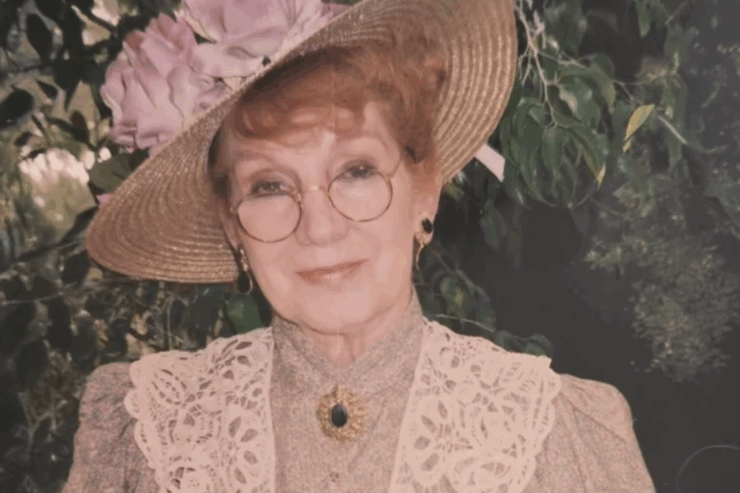
Dorethea: My granddaughter would read chapters from it to her children at bedtime. I have 11 great-grandchildren now. I’m the “Auntie Mame” of the family — I still like to dress up and play act.
Dave: You still keep in touch with your whole family?
Dorethea: Yes.
Dave: Growing up in Yerington during your teenage years in the late ’40s — after WWII, big band era — you mentioned you had a wonderful childhood. Recall some memories.
Dorethea: Saturday night was the big night to go out. Before television, we had many civic and fraternal organizations. One of the big community things was public dances at the rink hall, a roller rink building repurposed as the high school gym and event space.
Dorethea: My father was a superb ballroom dancer and taught us to dance. At dances, he’d first dance with my mother, then with each of us daughters — passing the stag line, signaling that the boys could ask us to dance. The music came from the Desert Troubadours — piano, saxophone, drums, and bass.
Dorethea: At midnight, everyone went to one of the restaurants on Main Street for a “midnight supper,” usually burgers. Those restaurants were often tied to the casinos. Over time, with the Anaconda Copper Company leaving and local businesses closing, Yerington changed. But newcomers love it for its quiet, safe lifestyle.
Dave: When you were going to those dances, did you have that beautiful red hair you have now?
Dorethea: Yes, I was born with a lot of red hair and didn’t gray until my 50s. I decided I’d always stay a “flaming redhead.”
Dave: What does “Dorethea” mean?
Dorethea: My mother said it’s Greek for “gift of God.”
Dave: I’ve enjoyed this — what a wonderful lady and life.
Dorethea: Thank you.
Dave: Tell me one more thing about the rink hall.
Dorethea: A local troublemaker set fire to it and went to reform school in Elko. Afterward, the VFW turned another building into the Vets Hall, which became the new event space for decades.
Dave: Tell me about living at Cogir in Carson City.
Dorethea: I moved here with all my costumes, hoping to get reinstated as a docent. Now I volunteer at the state museum and at Dangberg, with at least one or two gigs a month. The staff here is wonderful, and I feel fortunate at my age to have good health and energy.
Dave: What’s your favorite food in the dining room?
Dorethea: Meatloaf with gravy, mashed potatoes — just like my mom made.
Dave: If the gravy’s good enough, you don’t need butter on the potatoes.
Dorethea: That’s right — and you don’t need a knife for the meatloaf.
Dave: Even though I’m a proud Elko Indian and you’re a Yerington Lion, I’m sending a hug through the camera.
Dorethea: Hug back.
Summary
Dorethea grew up in Yerington, Nevada, in the 1940s, enjoying a close-knit community life filled with civic involvement and family traditions. Twice widowed, she returned to college in her 40s, earning degrees in psychology and education, and built a career helping children with learning and behavioral challenges. Her lifelong passion for history led her to become a docent and author of a personal and local history book, The Yerington Years. Now in her 90s, she remains active as a costumed historical interpreter, cherishing her family, her heritage, and the ability to share the past with others.
Liked what you read?
Spread the word!
Share
Related News
Boutique, luxury senior living
Luxury, boutique living reflects a growing shift in how older adults and families think about care, comfort, and daily experience. While the senior living industry offers a wide range of wonderful options…
Why private pay senior living offers more value than you think
Listen here Many families begin their search assuming private-pay senior living is too expensive. That reaction is common, especially when you are comparing options or researching the cost of senior…

Heartfelt holidays: Easy recipes for seniors, lasting memories
With the holidays right around the corner, there can be a lot to prepare for. Whether it’s shopping for presents, decorating the house, or deciding whose house to go to for what, there is always something…