Summary
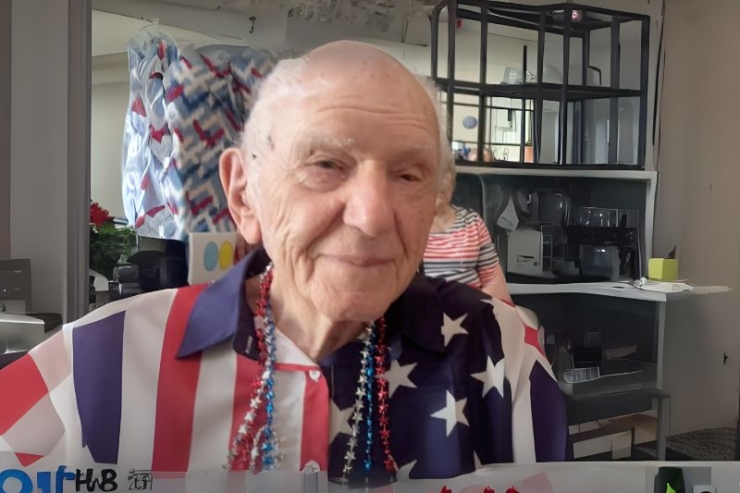
Herbert Marx, a beloved resident at Acoya Shea, shares his extraordinary life story—from surviving the Holocaust as a child and building a new life in America, to becoming a longtime soccer referee and even throwing out the first pitch at a Diamondbacks game. Now in retirement, Herb brings energy, humor, and heart to the Cogir community he calls home.
Transcript
Dave: When I stopped by Acoya Shea to meet you, my wife was with me, and you were flirting with her. Herb, you were flirting with my wife.
Herb: I actually loved it.
Dave: She loved your socks. And we were on the drive home, and I said, I think I just lost you to Herb.
Herb: Yeah.
Dave: And she goes, well, you’re not throwing out the first pitch. Herb is.
Herb: Yes.
Dave: I said, okay. And when I did meet you, you were just getting ready to go to a Diamondbacks game and throw out the first pitch. How did that go?
Herb: I know that that went just fine. And what did you throw?
Dave: A fastball? A curve?
Herb: No. I actually threw the ball underhanded because I had surgery, cancer surgery on the head.
Dave: Okay.
Herb: I was a soccer official, and I was never allowed to wear a hat.
Dave: I didn’t realize that you went through that surgery. Congratulations. You look great.
Herb: Right.
Dave: So you said something interesting there, and I knew that you were a referee in soccer.
Herb: Yeah.
Dave: But soccer referees can’t wear hats. I never thought of that because the NFL does– like football.
Herb: I know. But the NFL is not a sport.
Dave: I love it. Here we go.
Herb: The NFL is a religious sport because they kneel at the end of the game. Right?
Dave: Here we go. From a guy born in Europe now, we’re gonna get the soccer stuff coming through. Let me ask you about being a referee in soccer.
Herb: Right.
Dave: You’re the vanilla in the Oreo between two teams. They’re twisting. You’re always the bad guy. Do you ever get used to that?
Herb: Yes. I’ve lost more soccer games than anybody else in the world. I’ve been blamed for losing soccer games, you know, for my bad calls. You know?
Dave: You’re the reason we lost.
Herb: Right.
Dave: And you had a couple catch phrases when you would give somebody a penalty, you’d say “gotcha.”
Herb: Right. And, of course, in soccer, I ran into a problem also because of my accent. So I’ve been called, an f’n Nazi
Dave: Really?
Herb: Nazi.
Dave: From the players?
Herb: From the players. Yeah.
Dave: That’s an immediate ejection, isn’t it?
Herb: Well, after I eject a player, I’ve been called an f Nazi several times, and I’ve also been called an f Jew.
Dave: So when they were calling you abusive names Okay. Did they, like, using the word Nazi, did they know anything about your background?
Herb: Some people did, I guess.
Dave: That’s completely out of bounds. That’s and you’re in the media a lot. You’ve done TED Talks. You’ve been interviewed by so many people
Herb: Right.
Dave: In the Holocaust Museum. I mean, people know Herb Marx.
Herb: Right. So because, I’ve been in the public eye quite a bit. I am the only one who ejected a head of state. I do not know if you noticed, but I ejected
Dave: A president?
Herb: I ejected president George Bush, the old, the father who passed away.
Dave: George H Bush?
Herb: That’s right. I ejected him in March of 1989.
Dave: Oh, he was president then.
Herb: I was ready to start a game between Sheaenne Mountain and Coronado High School. But when I was told, mister, the referee, don’t start the game. The president is coming. So what would you do if you were told right now the president’s coming in? You know? Yeah. Yeah. Yeah. Well, it happened that Bush came down with two people in a black suit, and they said, referee, don’t start the game. So Bush was found out afterwards. He came from Houston, and he stayed at the Broadmoor Hotel, which is something like over here, the Princess of Biltmore Hotel.
Dave: Right.
Herb: That’s where the hotel is. The rich people, the fancy people stay. And he came to Shiley Mountain High School which was only about a half a mile away. He came to jog. Okay? So he walked onto the field, and he went into the center circle, and he laid down and did a couple, and for about five minutes and did stretching exercises. So he got up, and he shook hands at me and said, good afternoon, mister referee. So I shook hands with him, then I went in my back pocket, and I should, mention the following, probably will not get away with this today. But I took the red card out, and I showed him the red card.
Dave: And did he understand it?
Herb: Yeah. Oh, he knew yeah. He played. I found this out later. He played soccer for Yale. He played soccer. He was a goalkeeper for Yale.
Dave: Okay.
Herb: I didn’t know that. Went to college. And he and he told people, I never got a car before, but I won today. And I reported him to the Colorado High School Activities Association, which is probably the same thing in Arizona because, then he cannot play for a couple at least for a couple games or what have you, and they and they reported it to the White House. And I, in a national convention, I used to promote the NASO, the National Association of Sports Officials, which includes all sports, and we had a convention that summer in San Antonio. And I got a standing ovation from 2,000 people.
Dave: You ejected a president from a soccer game.
Herb: From showing the president a red card. Now today, you know, with the pumps that we have, if I put my hands in my back pocket, somebody might have
Dave: Different story.
Herb: But tell you, it was okay. So I made a news, and I made a TV show. I went home with my wife, and I said to her, guess who I red carded today? She said, oh, I saw that. President Bush, it was the TV that was there because they followed him where he went.
Dave: So after you ejected him, he didn’t pardon himself? He could’ve given himself a pardon?
Herb: No. Well, the secret service came in there. I escorted him off the field, and then somehow, he he they found a couple people from the truck, and and he took he took them, and they kinda jogged around the around the field for for about a half an hour, but that didn’t bother me.
Dave: I love it. And you refereed most of your life. Right?
Herb: Oh, yes. I refereed for over fifty years, and I quit refereeing at age 80 because I couldn’t keep up with the women no more. The women soccer players are just as good as the men in most cases. And the women who play soccer, they cost more than the men do.
Dave: So Mia Hamm lived here.
Herb: Yeah.
Dave: And we went out on a soccer field for a media deal, and I remember how incredible she was. Unbelievable athlete. How did you referee till you’re 80 in soccer? Because you’re running.
Herb: Right. I’m running.
Dave: So how did you do that, Herb?
Herb: I had to go to the gym all the time. Okay?
Dave: But even doing that at 80 years old to referee an entire soccer game, that’s that’s a big ask.
Herb: Right. But I was in fairly good shape, And the thing was, I used a lot of treadmill and swimming, primarily to get, so you could keep up. So the only way to keep up is that, number one, you have to watch a little bit of what you eat, and, you also have to do exercise by going on this treadmill. That’s why I think that, so you don’t puff all the time. You know what I mean?
Dave: Sure. And the staff at Acoya, you know this, Herb. They love you. You’re like the mayor of Acoya Shea. Everybody loves you, and the staff has to be used to these crazy hours. You mentioned being born in Germany.
Herb: Yes.
Dave: Now we have a lot of viewers that don’t know you, Herb. And they can tell by the accent. Right? Born in Germany. And I wanna go there, and I do wanna talk about the Holocaust because you’ve been so wonderful during your life to share so much and to educate so many. But let’s go back to that time, early 1930s. You were born in Germany? Okay.
Herb: And, I was born in 1934.
Dave: Okay. So let’s take everybody back real quick. 1934, it was just the ramp up period getting into Hitler and the Nazis.
Herb: Right.
Dave: By 1940, the year you’re talking about, the Nazis were in full force, although America wasn’t in the war.
Herb: Right.
Dave: The Nazis were bombing England, and the Nazi regime was starting to take over Europe.
Dave: You’re six years old.
Herb: Okay.
Dave: Now take me from that point.
Herb: I’m six years old, and my family was taken, the gestapo came, and they heard, they took us into the train station and put us in a cattle car. Okay?
Dave: You, your mom?
Herb: Me, my mom, my grandma, and three aunts. Okay?
Dave: So the Gestapo comes into your home in Germany, takes you, puts you on a cattle car
Herb: Right.
Dave: Going to Auschwitz.
Herb: Right. And the train ride was very bad. We were crammed like sardines, and people were trampling over sick people, you know, like this. And there was no latrine, so it stunk, you know, from all that stuff. And there was no food. The train made a couple stops and saw the opening in the window or door, what have you. They took in a little bit of water and some dry bread. Okay? But to me, I was scared. Okay? That’s about all I can say.
Dave: six years old.
Herb: I was never, I was never whipped. Put it this way. And it took two days, and they took us to a concentration camp called Gurs, G U R S. And Gurs is South Of Toulouse in France. And Toulouse today is the headquarters of Airbus. That’s where they make the Airbus. It’s like Seattle of The United States.
Dave: And the Nazis have already taken over France
Herb: And the Nazis Took over France yeah. Without firing a shot as you probably know. But the French resistance was very active. So they put us in and we got off the train, which was an awful ride and a lot of screaming from the people who like sardines. But I was young. Okay? And they put us in a concentration camp called Gurs.
Dave: Your family stayed together?
Herb: Yeah. We stayed together. I stayed on the same bed as with the mother.
Dave: K.
Herb: And, it was, it was scary. However, I did see people I heard shots. I saw people falling over. I saw people bleeding or what have you. I also saw dogs, which turned out to be German shepherds, attack some some prisoners or what have you, but I did not really realize what killing was.
Dave: You’re six years old.
Herb: Right. Now I did, it was very bad because we had latrines. We had some latrines, some open latrines in the middle of the between two sides of the bunks. There was a latrine with no privacy.
Herb: No privacy whatsoever. But they used me and a couple other kids, and I don’t remember these kids being in the same barrack as I was. They used to bring bread and water and clocks, and they used me, as a six or seven year old. I would open my hands, and they would put, bread, you know, packets like pockets. In our arms.
Dave: Like firewood?
Herb: Yeah. That’s right. And then I would walk to my barracks, and I would hand the stuff over to my mom, and my mom was required to pass it out for everybody in the barracks. I do not know how many people go in the barracks, but probably at least 50, I would think. And there were a lot of people because they were fighting for the bread. There was never– there was never much left from the bread. The Germans also used me, giving us small buckets of water, and we carried the water, I remember, only one at a time because otherwise, you would spill everything. We put water in the barracks, and I put water in the barracks where my mom was. My mom and my grandma and my three– and my three aunts. And to get some more food, the German soldiers, they were together, the guards were they were all together in some places. And there were trash cans there. And I remember going through the trash cans, and I picked up any food, any bread, or I remember, like, sardines or something like this. Whatever the Germans– and salami or whatever they had, I picked up some of the food that I saw in the trash cans, and I brought it to my mom.
Dave: Oh.
Herb: And my mom probably gave it to her mom, or I do not know if they divided it, but I spent a lot of time going to the trash cans. And some of the Germans, I think they didn’t stop me, so they might have liked me. Now I think my mom was also friendly with the German soldiers. I think my mom was very friendly with my German soldiers, if you know what I mean.
Dave: To benefit the family, probably.
Herb: Yeah. I’m talking about sex.
Dave: To benefit the family, probably.
Herb: Yeah. Then. And the Germans, after about six months over there, they took me out of the concentration camp. And they did so. They put me on the back of, like, a deuce and a half, and they and they covered me with some with, how you call it, tarpaulin. And they told me to stay under there because we were gonna go outside to a city. So the Germans took me out, and they took me off at a place called Chateau La Rade, which was a Catholic orphanage. So I went to the Catholic orphanage. And my mom just told me goodbye. She kissed me goodbye, and that was it. My mom knew that they were gonna take care of me. Okay?
Dave: So your mom, just to be clear, she sacrificed for you.
Herb: Exactly.
Dave: She made those concessions with the soldiers so that you could get out.
Herb: So the sisters turned me over to the German, to the French resistance, and they took me to Lyon, France. And then one night, they took me on a hike up the mountain two– two days in a hike through the Alps, and they dropped me off in Switzerland.
Dave: It’s like the Sound of Music.
Herb: Exactly. But when I went over to Switzerland, I was scared because the guards in Switzerland had a uniform on. Okay? And the uniform, what was not much different than what the Germans had, except they didn’t have the, what have you. But the Swiss soldiers then I guess the administration store where they dropped me off, they sent me to, near St. Gallen, and they put me in a place called Kinderheim Friedberg. They put me in a Catholic orphanage again. And this was in the German speaking part of Switzerland. Again, Catholic. So I was basically you know, I received Catholic instructions, but I didn’t know the difference between Jewish or Catholic or what have you. So, they found out that I was Jewish, so they transferred me to a place called Institute Asher Bay, Asher in Beleban. And Beleban was a small village west of Lake Geneva. And Belbin was Jewish. So it was over there that I found out that I was swift. I was a Jewish. I spoke French.
Dave: So Herb, as a 10 year old, you weren’t educated, Jewish or Catholic. You’re being transferred from one place to another and one country to another and an orphanage to another
Herb: Yeah.
Dave: And political groups, one or the other. As a 10 year old kid, you have no idea
Herb: Yep.
Dave: And you’re going anywhere.
Herb: And like I said, I was never I was never mistreated. Okay? The French Jewish place, and, then the war ended. Okay? And when the war ended, the international Red Cross came to the orphanage. And I remembered only one thing: I had an aunt and an uncle in The United States.
Dave: Okay. So I wanna be clear here. The war ends. You remember you have an aunt and an uncle in The United States.
Herb: In The United States.
Dave: Take me from there.
Herb: And at the same time, I was told that now I’m 12 years old. Okay? I was told that my family had been taken by truck to Auschwitz, that’s in Poland, and that they were executed. So I lost the entire family in Auschwitz.
Dave: So they’re telling you what had happened years before.
Herb: Yeah. But you have to remember this. I,
Dave: You didn’t know.
Herb: I didn’t know what executed meant. You know?
Dave: You don’t understand.
And when you tell a young kid like me, they died, I don’t remember. Put it this way – I don’t remember kind. Okay? But in the end, they contacted me. Okay? And they sent me to The United States, and I came to The United States on 4 August 1946. The United States to me was empires of all a hundred buildings that are hundred and two stories high. Americans all being like in Scottsdale, the Americans are all rich. And, nobody goes to work, not necessary. So I got picked up by my uncle. And my first disappointment was that the streets of New York were not paved of gold. And his house where he lived only had six stories. Now this to me was very disappointing because I saw the The USA skyscrapers, and had six stories. But anyway, I went in and I was disappointed. And the worst thing was that on Monday morning, my uncle had to go to work. I thought that everybody had money to grow trees, if you wish.
Dave: Interesting.
Herb: And I’m afraid that there are some countries today perhaps still who think the same thing that I did back then. Everybody thinks the Americans are rich, and everything is gold over here. It’s not. It’s nice, but it’s not. It’s better than anything else, but it’s not like this. So I was disappointed. During the two weeks, I was in New York. K. My uncle was married too. He was married to a girl from Brooklyn, and she did not speak French. She did not speak German. Okay? So I couldn’t speak to her. But my uncle took me to a baseball game in August of 1946, and it was a game between the Boston Red Sox, Ted Williams, and the New York Yankees, Joe DiMaggio and Mickey Mantle.
Dave: That was your first game?
Herb: My first game.
Dave: He picked a good first game for you. The Red Sox, Yankees don’t get bigger than that.
Herb: However, I was very much surprised. Remember, this was August 1946. I saw a bunch of old men running around in the field with gloves in their hands.
Dave: Not understanding the game. What are they wearing gloves? What are these bags for? Why is the fence there?
Herb: It is not cold outside. Sure. Then I saw them, to kinda catch a small ball, what what have you. But, anyway, I went to New Jersey, and, I went, and then in September, I went to school for the first time. At intermission, they were playing what turned out to be softball, and they gave me a bat. So I saw a stick hit a ball, and I hit the ball. And everybody starts yelling, run, run, run, and I’m looking like a stupid a-hole. I had no idea what the run, run, run was. In addition to that, I was very proud of myself when I managed to learn a little bit of the language.
Dave: Did these kids have any inkling, or did they realize what you had been through?
Herb: I doubt it. I doubt it, that if you told me you were in a concentration camp, they probably did not have any idea what the concentration camp was like. You know? So I don’t think so. But, I also, in New Jersey at that time, there were a lot of Jewish people. And my uncle was orthodox, and that was awful. Okay? So they, I, because I was 12 I was getting on 13. I had to go to study Hebrew to become a bar mitzvah.
Dave: So in high school, you know, 15 through 18, were you starting to fit in and make friends and become somewhat popular? You weren’t bullied anymore? You kinda were fitting in?
Herb: Yes. I spoke– I became one of the girls. Okay? I’ll tell you why. So I did want to be a farmer. Okay? And I I had no money, obviously, to go to college. And, I didn’t want to do just nothing, so I took secretarial. Okay? And on my first year, seventh period in high school, I took shorthand, theography.
Dave: Oh boy, that’s an art that nobody knows anymore.
Herb: I know.
Dave: Nobody knows shorthand. Oh, I’m You know, in those days, Herb, it’s really different that the era that you’re talking about. When you’re talking about making a decision to go into clerical, there was shorthand. There were typing pools.
Herb: So I took shorthand in the seventh period and typing in the eighth, the same class. So as I went into the seventh period, I remember, I see girls coming in.
Dave: You always had an eye for the girls. You still do.
Herb: I was the only guy. So I graduated from high school. And then I went, and my uncle wanted me to become a butcher. I didn’t like that.
Dave: But was your uncle disappointed that you didn’t wanna do that?
Herb: Yes. He said I should be there. So I went to college, and I was hoping that I could get a job in the summertime to help pay for that. Back then, the college didn’t cost $50,000 a year. Then I got my draft notice. So when I am 20 years old.
Dave: Wait a minute after all you went through, you got drafted?
Herb: I got drafted. I got drafted into the army on 14 October 1954. And I want to thank everybody over here at this radio station because you got it– because, Monday, when I get my retirement pay, I will have received retirement pay from the US army for fifty years. Would you believe that?
Dave: Okay. Now we’re talking, Herb. Now I’m happy. Okay.
Herb: I doubt that you guys are gonna get a retirement pay for fifty years. I don’t know.
Dave: Okay. I’m happy now. I’m happy because you deserve that. That was after Korea?
Herb: There was, after yeah. Well, at the end of the Korean War. Okay.
Dave: Okay. But think how useful you would be in a clerical position in an embassy. There’s a spy.
Herb: They did not, that’s what that’s the United States army. Okay? I then I was sent to Germany, to Augsburg, Germany, to defend my own country. And I have in my home, I got a ribbon for German occupation.
Dave: After everything you went through, they drafted you into the US army, and then they stationed you back in Germany after all you’ve been through?
Herb: Right. I was in Germany. Okay? And they, the American army apparently had a shortage of interpreters. Okay? So when they found out that I knew typing, shorthand for court marshals, I took court marshals notes. That was before they had these machines.
Dave: Bilingual.
Herb: And and and they figured, oh moxie boy, we can use them. Okay? Now in order to become an interpreter, you had to have a top secret security clearance. Okay? So in order to get a top secret security clearance, you had to be an American citizen. So you know what happened? They took me on a jeep in– I had fatigues on. They took me to the American consulate in Munich, Germany, which was only about an hour away from Augsburg. And, so they told me at the embassy– at the embassy, somebody– a sergeant will win me, and and and the people told me behind the desk, private marx, sign here. So I signed. You know? I did what the army told me.
Dave: To become an American citizen.
Herb: And then he shakes my hand, says congratulations. You are an American citizen. Did you want to be an American citizen? I had no idea what I had no idea what citizenship was in naturalization.
Dave: Sign here and you’re an American citizen.
Herb: Yeah.
Dave: I’m just trying to put myself in your state of mind. You’re back in Germany. You told me earlier in the interview that you remembered your address.
Herb: Yes.
Dave: Now I don’t know if you wanted to go back in that time or if that part of Germany where you were living when you were six years old is still available because you mentioned that Germany was now split up into four Different areas. You want to but weren’t tempted to– Okay.
Herb: I got three days off, and I went to Karlsruhe. It’s about a two and a half hour train ride, and I went to the building where I was born. Okay? Now the first thing about the area I saw on the bottom, this area is of limits to all military personnel. Okay? So that indicates that perhaps it was a red light district, maybe. You know, stuff like this. That’s what I thought. You know?
Dave: It wasn’t politically restricted, was it, to where America
Herb: I don’t think it was. But I went to the building, I knocked on the door, and a lady opened up. I say, I’m Herbert Marx. Oh, you’re Herbert? Are you Selma’s son? I said, yes. Selma is my mother’s name. Okay?
Dave: So it’d been twenty years since the Nazis came in and took you by train, you and your family.
Herb: Occupied that house. Okay? Then one of the ladies says to me now this is the first time I heard this. Have you met your father? Remember, I’ve never met my father in my life.
Dave: Because they know him. Right?
Herb: And this lady asked me, have you met your father? I was, what? And I said, no. Then she said, would you like to meet him? I said, meet him. Well
Dave: He was alive?
Herb: He lives two blocks from here. So do you wanna see him? I said, yes. So she took me. This one lady took me two blocks into a building, and she knocked on the door and came in, what have you. And there and there is an elderly man sitting in the kitchen, on the kitchen table, because that’s what the Germans always did. You sat in the kitchen, and then if you have a family or a good relative, you got to sit in the living room. You know?
Dave: Herb, did you have any idea he was still alive?
Herb: So here’s this elderly gentleman, and she says, mister Halmet, this is your son, Herbert. And this is how I met my father for the first time in my life.
Dave: Did he know that you were alive?
Herb: I have no idea.
Dave: Because he probably thought that he was in Auschwitz
Herb: He was in shock. Okay? I knew that. He was there. I mean, he was shocked. He didn’t expect me. Okay? Like, I didn’t expect him. Only thing I know is that there were two pictures of a couple of girls with a cross hanging there. So I asked, what religion are they? Oh, your father is Lutheran, and these are your half sisters. I never I never met these ladies, never before. And after half an hour, I left. He did not talk very much. He wasn’t shocked, and I never went back to see him because I had no feeling at all towards that man. He was a complete stranger. And his name was not Marx. His name was Berthold Palmer. And he was a master carpenter, and I didn’t– I didn’t inherit anything from him. That’s for sure. I don’t know. So I said, the hell of it, Transfer me. So they transferred me to the headquarters of the seventh army, and I was assigned to the 30th army postal unit. And this is where I met Elvis Presley– Elvis Presley. First time I remember, who are you? But you know I’m Elvis Presley. I didn’t know who that was. So I handed him his mail. He got a lot of fan mail from his admirers in Germany. So I would take some of his mail, okay, in our break room and put it on the stove, with water. And over the smoke, when the water was boiling, I was able to take some of the stamps off. Oh. Now this was not stamped.
Dave: I get it, I get it
Herb: They used stamps. They look nice for my stamp collection. But he never noticed. But that’s why I met Presley, but, like, I met him at least, I would say, half a dozen times, but we just handed him the mail and good morning and stuff like this.
Dave: You know what, Herb? One of the things that I love about Acoya Shea and Cogir and one of the reasons I’m so proud to be part of the Cogir family is it’s happy. And when you go to Cogir, everybody’s living their best life. They’re living. They’re doing hobbies. They’re community minded. They’re eating with each other. They’re laughing. They’re smiling. Right. They’re having camaraderie and company. You’re watching your soccer games. Linda’s gonna come over and celebrate with you. I love that. I’m happy for you. Herb, this has been a pleasure. Thank you. Oh, you’re gonna sing for us. Go.
Herb: Every morning you greet me Small and white, deep and bright, you look happy to meet me. Plus, of the snow, may you bloom and grow, bloom and grow forever.
Liked what you read?
Spread the word!
Share
Related News

Boutique, luxury senior living
Luxury, boutique living reflects a growing shift in how older adults and families think about care, comfort, and daily experience. While the senior living industry offers a wide range of wonderful options…

Why private pay senior living offers more value than you think
Listen here Many families begin their search assuming private-pay senior living is too expensive. That reaction is common, especially when you are comparing options or researching the cost of senior…

Heartfelt holidays: Easy recipes for seniors, lasting memories
With the holidays right around the corner, there can be a lot to prepare for. Whether it’s shopping for presents, decorating the house, or deciding whose house to go to for what, there is always something…