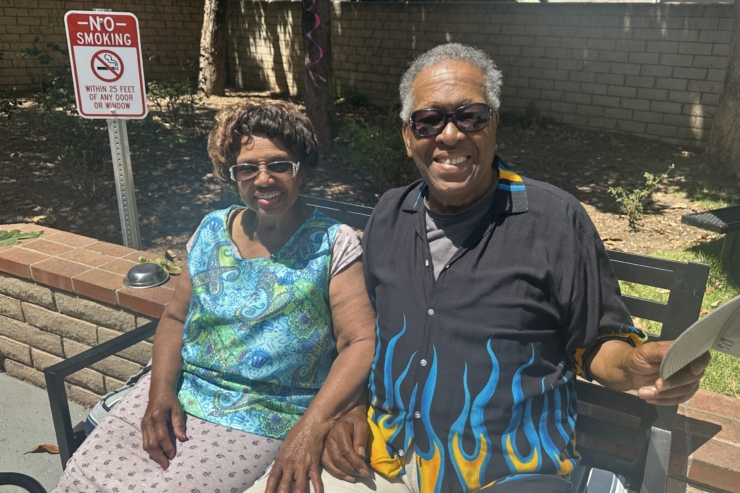
Transcript
Dave: Martin, let’s start off by saying, what a life. What a life.
Martin: It’s been good.
Dave: Yeah. It’s been really good. You’ve pretty much done it all. Let’s start in Chicago. That’s your hometown. Correct?
Martin: Yeah. That’s correct. Yeah.
Dave: Where at in Chicago? Because Chicago has a lot of suburbs.
Martin: Well, on the South Side near the lake.
Dave: Alright. So South Side, I’m thinking White Sox. North side, I’m thinking Cubs. Is that the way it was when you were growing up?
Martin: Yeah. It was fun. I went to a lot of baseball games, but, after growing up pretty much in my mid twenties, I kinda drifted away and got into more of what was happening every day in the world of the military and stuff like that. You know?
Dave: Yeah. Let’s talk about that. And then, obviously, we want to cover your jazz career because it’s pretty fascinating. Let’s talk about the military, and let’s talk about young Martin growing up in Chicago. Take us from there going into the military.
Martin: Yeah. Well, out of high school, about, I don’t know, about a year after that, My family was always kind of militarily involved. We were a pretty patriotic family.
Dave: And, Martin, when you’re talking about military and going into the military from a patriotic family, are we talking nineteen fifties, late ’19 fifties?
Martin: Exactly. My brother went in first, and he was in the army. Then I had another brother that went in, and he was stationed in Germany. And then I had another brother who was stationed right in Chicago where we were the militaries, and then I was last.
Dave: Oh, so you have three older brothers in the military.
Martin: Right.
Dave: And, Martin, going back to that era, late nineteen fifties, we’re out of Korea by a number of years, and it’s really early just getting ready to go into Vietnam. So with your brothers in the service already, was that a big concern to your family yet, or was Vietnam not really on the radar?
Martin: I was blessed I didn’t have to really stay in Vietnam, because I was almost coming out of the service about that time. And, although they wanted me to stay in because they were trying to get every able-bodied man, cook everybody, car washer, everybody, and give them a gun and say, let’s go and fight. I didn’t go in. I got out just in time.
Dave: What branch of the service were you in?
Martin: I was in the air force. I was in communication, airborne radio operator.
Dave: Interesting. Tell me about that back in the day. And did you choose to go into being a radio operator, or was that assigned to you?
Martin: You know, I think it had something to do with music, oddly enough. To me, cold was always like music, and you never forget it once you learn it. Right?
Dave: Well, I wanna go back to that era, Martin. So we’re talking late nineteen fifties. Eisenhower is president. Jazz had already exploded not only around the nation but around the world. It was peaking as high as it had ever been before. And here’s young Martin, a young man in Chicago, which is a hotbed of jazz. Did you know that that’s really what you wanted to do for a career?
Martin: No. I like music. You know? I was really into the music part of it. Anything that pertains to music, you know, I caught on to it. Chicago, when I learned four or five chords on the guitar, I started to go out and work. And, in downtown Chicago, that was a club called Joey’s. That was the first club, and I learned about, I don’t know, about four chords. I went in there, and I sang and they hired me. And, that was really great. And a lot of it was kind of Latin influenced in me, because a lot of the tunes were like, you know, calypso and mambo. That was that era, matter of fact. So that was strong, and people loved it. I love to sing it for them. But my mother, she taught me just the beginning of some scales and stuff like that, and she played ragtime very well. And, you know, ragtime. Right?
Dave: Of course, ragtime was absolutely huge in the fifties and even more so before that.
Ragtime goes back to the early part of the century.
Martin: It sure does.
Dave: It’s a fun type of music, isn’t it, Martin?
Martin: It is. It is. It makes you wanna move. You know?
Dave: So many people will say, no. That’s not jazz. That’s blues. No. That’s not blues.
Martin: That’s jazz. Uh-huh.
Dave: Educate me because in my opinion, they bleed together. Correct?
Martin: Well, blues is more basic than the other than stride on the piano. In blues, you don’t do much striding. You know? You know? And but, the other one you do, you stride. But blues is just a couple of chords. I mean, it’s four or five chords, and it’s very related to country and Western. It’s almost the same thing. Almost the same thing. It’s country and western. Same chords. It is adjusted better. They know how to change it around and well, they’re different. They hear it differently, but the chords are the same and, which they’re finding out finally today. I mean, there’s a whole lot of rhythm and blues. It’s all of a sudden, it sounds like a country and vice versa, and that’s wonderful too. That’s a changing time. But the– Mother used to play the strides, and it was great. And I would like it was very syncopated, which brings me back to the cold, which is syncopated. Just dots and dashes, but you can make melodies out of that. You know?
Dave: You had a house full of music. And from what I understand in jazz, some of the best jazz players, from what I hear, didn’t even read music. It’s more playing by feel. Correct?
Martin: Correct. Correct because after all, way back then, just coming out of slavery, we didn’t know much about, you know, b’s, a’s, b, c, d flat, and all that kind of stuff. It wasn’t necessary. One of the ways blues started was right in the fields when the black people were picking cotton, if they wanted water, they’d holler out. “Water.” And they do it after a while, they start doing it to a tune. And, the person with the water would say, “okay. I’m coming.” And he’d say it back to them in tune. So now you have two notes, “ah-ah water. Bring me water.” And the other guy would mean, with the water would say, you know, “I’m coming. I’m coming.”
Dave: You still got it, Martin. You still got it.
Martin: Thank you.
Dave: When you talk about playing at Joey’s in Chicago, you mentioned playing the guitar, but you started out as a percussionist.
Martin: Yeah. I started as a percussionist, because I always did like that also. I did the music from the era, Latin music, I love very much. And in those days, there was a lot of Tito Pointe and pretty lively music.
Dave: Yep.
Martin: Very lively. I loved it. And I started to sometime, I would sneak over to the North Side of town, where a lot of Latinos live and parties and would party on the weekends. And they had these big halls that they would play in, a lot of people. And I would go there, and I would listen and talk to them. And I learned a lot about drums because, then it was, like, strong music coming out of South America, Puerto Rico, Cuba, Brazil, and I would learn all those rhythms. My sister was a dancer. She was in one of the first Afro American dance groups in, out of Chicago, and it was about 30 women. 30 men women and about two men. That’s all. And I used to sit in the center of these drummers and listen to them and absorb it, and then I started playing with them. And, you would say that I took from all of these different genres, all these different ways of entertaining and put it together, and that’s what I do. Some of the things might have a little Latin background to it with some blues words.
Dave: Tell us about your album.
Martin: Yeah. I made two, really three with assisting some other people like flute players in Chicago and playing jazz. But my two albums, I was with Chess Records. And Bo Diddley was there. Muddy Waters was there. I used to see them all often. But uhh
Dave: Tell us about that, Martin. I have to ask you. Tell us about Bo Diddley off stage. What was he like?
Martin: He drank a lot, but not always. I mean, I would see him outside of one building, outside of Chess Records, and for some weird reason, two days later, I’d see him in New York in an identical place in front of a musical store or whatever. And we would crack up, you know, and say, “Hey. What is this? I meet you here all the time,” and we’re meeting each other. So we would exchange stories. And, other than that, he had quiet spells, and he was really quiet. And, what else can I say? We talked music. We talked farming. He did farming. I didn’t do what my daddy did, but I didn’t do much farming. You know?
Dave: And Muddy– and Muddy Waters, what was he like?
Martin: Muddy Waters was like let’s see now. I’m thinking of somebody else that was with him. Harmonica player was with Muddy. Muddy played nice guitar, and many people didn’t know that it was a very simple simple way he played guitar. You know? Even if he was just finger picking it through which he did a lot, he knew just how to manipulate those strings and lay back and make it look easy. And it was easy to him. You know? So, that’s what a lot of people would go there and just listen and concentrate on every note that came out of his finger, out of his heart through that guitar.
Dave: Martin, when you’re in a recording studio with–
Martin: Yeah.
Dave: Bo Diddley and Muddy Waters, is it fun or is it stressful?
Martin: Stressful? No.
Dave: I mean, you’re those are the greats, those are the greats in music. So is there high anxiety, or is there less anxiety because they’re just so good?
Martin: Yeah. But, they don’t exhibit that. They don’t show that. They’re not show offs. You know? They’re laying back and listening to me, you know, and vice versa. I learned and I guess they learned too. You can’t go through life without it. And it was wonderful just, you know, to play with them.
Dave: And when you were doing recording, you were doing straight takes. You weren’t doing one instrument at a time like they do today. You were playing together and trying to get the best take you possibly could at one time.
Martin: We did a little separate playing. You know? But that came much later. That came much later, but they used to just set up the microphones and let you go or put the drummer in a certain place separate from everybody else so it wouldn’t be any over ring in those days and
Dave: Yep.
Martin: Won’t out blast the guitar and stuff like that. So, it was really fun, and you might have done two or three takes, but it was really nice. It was really easy to do. They made it– well, they were drinking sometimes, and we really got into it. I wasn’t a drinker. I never was heavily a drinker. I drank, I went through a period when, when I would drink after every song, somebody would say, hey. We’ll play this song. I would play it, and they’d give me a drink. You know? Sit a drink up there. And sometimes, I’d have a dozen drinks in front of me. You know? And golly. And so, they drink it and then they try to get home. I can tell you some awful stories about how my car was parked when I got to a hotel I was staying at. I don’t know how I got there.
Dave: But in the industry, drinking was a part of the culture, wasn’t it?
Martin: I’d say more yes than no.
Dave: Martin, your career took you to levels that most musicians never get to. You, through your career, were able to experience what few get to experience, such as being on national television. You were on the Merv Griffin show. Tell me about that.
Martin: That’s scary because everything is done on, like, a time schedule. Okay. Here. Five minutes for this. Not this Merv Griffin show. I did about 2-3 shows in and around Chicago on television, and one was learning pop songs or what they call pop songs in those days. Just standing up without my guitar and with a microphone. That was scary. And I remember doing one tune. I don’t see me in your eyes anymore. I forgot all the words. Just boom. And so they played the introduction, went around again, and my father was out in the audience. And when I heard him clear his voice, all of a sudden, the words came back to me. My father could be pretty disciplinary now.
Dave: And when you’re doing television shows, that’s one take. Correct? In front of a live audience.
Martin: Yeah. Right. And they’re controlling the audience too. There’s a guy down there saying, okay. When I put this hand up, you do this. When I put that hand up, you do that. You know? You know what I mean? Controller of the audience.
Dave: The first time you were on television, you’re on stage, and you look at the television monitor, and you see yourself, what was that like?
Martin: I wanted to turn away because it was distracting. I would look at myself and everything, but it would go away.
Dave: And Martin to set the stage for everybody, during that era, there were a couple big national shows. That was it. There was The Tonight Show. There was Mike Douglas, Merv Griffin. So doing a live performance on those shows, it had to be high anxiety and a lot of pressure on those shows.
Martin: There was a show that I won called the Artist Moon Festival in Chicago, and I won it. I won the prize or the money and stuff like that, but this was in Chicago, merchandise Mart building.
Dave: Mid nineteen sixties, Martin?
Martin: Right. Right. Sixty– sixty one.
Dave: Okay. Okay.
Martin: I sang in front of 3,000 people, and I wanted to. And, they thought that I was the best, I guess. So in front of 3,000 people, I won it, and it was in a round, which is like a big giant, big hockey puck. That’s what it reminded me of, but it wasn’t around.
Dave: So center stage, is the stage circling?
Martin: Yeah.
Dave: Okay.
Martin: Yeah. It’s complete just like a hockey puck. You know what I mean? Yep. Flat and dark and no corners.
Dave: But it’s rotating. The stage is rotating.
Martin: I don’t know if it was rotating or not, but I was rotating. I was walking all around. I couldn’t stop. I had to sing in all directions, and they didn’t have phones like they have now. So what I saw blinking back at me was cigarettes. Everybody had cigarettes in the audience. 3,000 people. These cigarettes went, like stars in the sky. You know? But they didn’t have phones like they have now, you know, so they could light up and stuff like that.
Dave: That was very normal in those days for people to go to concerts and smoke. That was very normal. So towards the end of your performance, that had to affect lighting and everything else. It’s amazing they could see you at the end of your performance. It’s like Martin, I watch old basketball clips, like the Boston Garden, for example. And Red Auerbach is sitting on the bench coaching the team and smoking a cigar. And when you see some of the footage back then, the whole arena is smoky. That was very normal.
Martin: Could you see the people?
Dave: Right. And from the stage, your career also took you to some interesting experiences in the recording studio with other big name players like Earth, Wind, and Fire.
Martin: Yeah. I played drums with them. And, on their first album and the second album, just some harmony in spots. And when I was in Chicago, I got a job out in LA
Dave: Right.
Martin: From the owner of a club in Chicago called “It’s Here.” So, I came out here, and Maurice White, who was the leader of Earth, Wind, and Fire, said, you know, when we were in Chicago at the studio, he fell in love with the way I played the guitar and the Latin stuff. And, he said, “Look, man.” He said, “I’m gonna follow you around and really stay with you until I can learn what’s going on with the Latin thing.” And so that’s what he did. He would– after he would work with Ramsey Lewis, who was a good friend of mine. Ramsey, he didn’t wanna he didn’t want to leave Ramsey because Ramsey was paying him $500 a week. See? He was up there making that good that good big money.
Dave: In those days, that was a lot of money.
Martin: Yeah.
Dave: Martin, you had an influence on Maurice from Earth, Wind, and Fire with some of the Latin beats.
Martin: Yes. Fields. Yeah. Some of the Latin fields. And, but as things go, after we finally got him out here, it took almost a year to get him out. He came out with his brother, Frank, who played drums, and his other brother, Verdin, plays bass, wonderful bass. And I really got along with Verdin because he was a very nice dude, very nice, but he’s still here. I think it’s only two of them still alive now.
Dave: Oh, he still tours, and he still has that big personality. And today, respected as one of the best bass players of all time.
Martin: True. True. Yeah. Yeah. So we played together a lot. And, I met him, and we used to play with the group, and then he would come over to the club Blah Blah I told you about. And there, I sang a lot. I met Al Jarreau.
Dave: Not just any jazz singer. It’s Al Jarreau.
Martin: Yeah. It’s Al Jarreau. So me and Al used to sit in the back on the floor, listening to the show. And when the jazz musicians got up there, we would riff with them, not on stage, but on the floor in the back. It’s like we would be practicing along with what they were doing. And we learned, I learned much more about riffing with Al and but Al was so poor, he was singing on stage and sleeping on stage at night because he didn’t have a place to stay. You know?
Dave: In those days, it seems to me, Martin, like, everybody helped everybody. Like musicians, they all hung out together, and you were pulling for each other. So when you mention Al Jarreau and Maurice and those names that are common household names today, they were part of a fraternity of musicians that were all pulling for each other and working together at the same time.
Martin: Exactly. Some of a few of the tunes that Maurice wrote. It was funny. We’d be in the pool room off from the studio, shooting pool or playing chess or whatever. And sometimes Mars would come in with a pencil and a paper, and he’s writing lyrics to a new tune. And he and he asked me for a couple of days, you know, what should I do with this tune? And so I told him, and he put it in the tunes, and they’re in there today. You know? But it wasn’t the whole song. It was just part of the song. But, it was still made the tune. It made the whole thing. I don’t know which way to–
Dave: What a career. Look at that. What year did that come out?
Martin: It came out, let’s see. It should be on here somewhere. It came out in the sixties.
Dave: And that was recorded in Los Angeles?
Martin: No. They were both recorded in Chicago.
Dave: Okay.
Martin: Yeah. I went to Chicago. Even if I was out of town, I went there to record. But there were some great clubs there in those days. I mean, that musicians would come to, you know, Miles. I met him there, but that was brief because he went back to New York.
Dave: It’s interesting to hear you just refer to him as Miles because you guys were friends.
Martin: Yeah. Oh, I’m sorry. I didn’t realize I did that. Yeah.
Dave: No. I love that because you guys were friends, and sometimes these names get so big, we forget that they’re people. People who started in their careers like anybody starts in their careers, they just elevated so high. And when you hear some of those recordings, your own or Earth, Wind, and Fire or Miles, memories must just come flooding back.
Martin: Yeah. It’s true. It’s true. And, you know, you wonder why they’re not reproducing it today. You know? It’s because music, you know, it’s not like, it’s not like a car. It’s not like money. It’s in the air. It’s in life.
Dave: It has to be bittersweet, kinda happy, sad, because speaking with you, Martin, I can tell how grateful you are of this incredible career. And you have to be happy to have achieved what many never achieve in the music business. But then it must be a little sad because you miss friends like Maurice and some of the relationships that you’ve had over the years. So it has to be a little bit of both.
Martin: Mhmm.
Dave: Now you’re at the beautiful Cogir community of Studio Royale in Culver City, California. Are there other musicians there that you get to jam with a little bit and still enjoy your music?
Martin: There’s been a couple of classical women who are strictly classical, which I’m not. But can I still talk to them? You know? We sit down and we talk about different music and places and stuff like that.
Dave: So many of the artists today from Usher to Bruno Mars to Michael Buble, they always point to jazz and blues though, as the basis of what got them to where they are today. So there’s always that gratefulness going back to the era that you were so much a part of.
Martin: You hit it right on the head. Bruno Mars. Yeah. Usher, these are the people that I respect today, and I’d love to play with them because we’re playing the same thing. We’re playing the same thing. We travel the same road, and we hear, you know, alike. You know? And it’s so nice to know that it’s still being carried. It’s still being carried as long as they’re out there doing their thing, being free about it.
Dave: Talk about living at Studio Royale in Culver City, a Cogir community. Talk about living at Studio Royale.
Martin: There’s one person here from Chicago and, like me, from the same side of town and knows a lot of the same places, The school teacher lady, and she’s been a school teacher for forty years. We get along great. We get along really great. We laugh a lot and stuff like that, and I’m pretty sure the people kinda look at us and say, oh, wow. They must have something special. I guess it is something special because we talk, and we understand each other and stuff like that. We’ve been to a lot of the same places in Chicago and out here. So, we have a lot in common there.
Dave: And do you watch the Chicago Bears together?
Martin: I do. She doesn’t.
Dave: This is a year, Martin, that you wanna be a Cubs fan. White Sox, not so much. Martin, this has been a pleasure. Congrats on your career, on your life that still is full of life. I can tell by your big smile, and I’ve just really enjoyed sharing your experiences. And that’s one of the reasons, Martin, why I love hosting this segment so much is I get to meet friends like you. A couple weeks ago, I talked to the oldest living Major League Baseball player today. He won three championships with the Yankees. And within– during the Mickey Mantle, Yogi Berra, Whitey Ford days. But I get to meet and make friends with people like you, Martin, and that’s the best part of hosting this segment. So thanks so much for giving us the time. I really appreciate it.
Martin: It’s my pleasure, and keep doing what you’re doing too.
Dave: Thank you. All my best to you, Martin. Thank you.
Martin: Uh-huh. Bye bye.
Dave: Bye bye.
Summary
Martin, a resident at Studio Royale by Cogir in Culver City, California, reflects on a remarkable life filled with music, service, and unforgettable experiences. Growing up on the South Side of Chicago, Martin joined the Air Force as a young man, serving as an airborne radio operator before launching a long and accomplished career in jazz and blues.
From his early days performing in Chicago clubs to recording with legends like Bo Diddley, Muddy Waters, and Earth, Wind & Fire, Martin shares stories from the golden era of American music. He talks about his greatest influences, playing Latin rhythms, appearing on national television, and the deep friendships he built along the way—including with icons like Maurice White and Al Jarreau.
Now enjoying life in a vibrant senior living community, Martin continues to connect with fellow residents and reflect on a career that helped shape the sound of a generation. His story is one of talent, perseverance, and a lifelong love of music
Liked what you read?
Spread the word!
Share
Related News

Boutique, luxury senior living
Luxury, boutique living reflects a growing shift in how older adults and families think about care, comfort, and daily experience. While the senior living industry offers a wide range of wonderful options…

Why private pay senior living offers more value than you think
Listen here Many families begin their search assuming private-pay senior living is too expensive. That reaction is common, especially when you are comparing options or researching the cost of senior…

Heartfelt holidays: Easy recipes for seniors, lasting memories
With the holidays right around the corner, there can be a lot to prepare for. Whether it’s shopping for presents, decorating the house, or deciding whose house to go to for what, there is always something…