Transcript
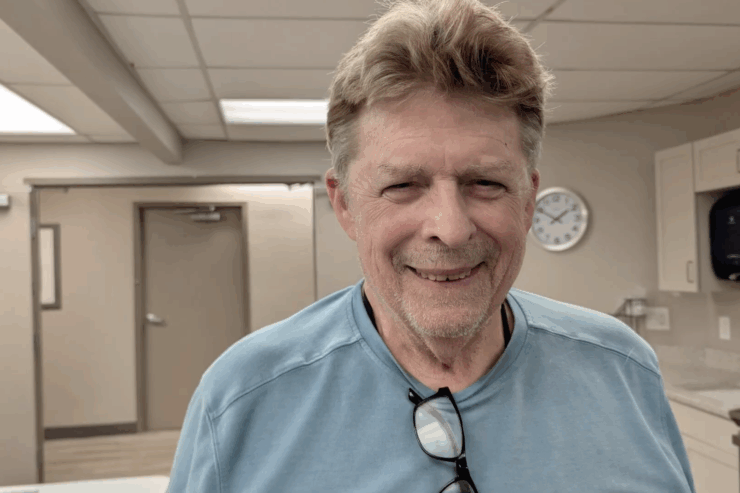
Dave: Mick, I understand that Solista Charlotte community by Cogir just had a party for you. Is that right?
Mick: They did.
Dave: Tell me about that.
Mick: I celebrated a year of sobriety. It was great. When I first came here, I couldn’t walk. I had been in assisted living after a pretty bad accident — I couldn’t walk. I came here in a wheelchair, and inside of two months I had thrown away the cane and the walker and was walking on my own. I’ve been doing it ever since.
Dave: Congratulations on walking.
Mick: We have really good physical therapists and they worked me and worked me. Before long I just said, “This is silly, I’m not going to do this anymore,” and literally threw them away. Also, the people here have been so supportive of everything I’ve done. I get along with people great — I’ve been a people person all my life — and they’ve given that love back. The love of this place was a major part of me being able to walk
Dave: Mick, you’re truly an inspiration. On a Friday, we open up our conversation with you telling me that Solista Charlotte threw a party to celebrate one year of sobriety — congratulations on that. And now I learn it took a couple of months and you’re walking because of physical therapy there at Solista Charlotte. Life’s good for Mick right now.\
Mick: It is. I turn 80 next month.
Dave: Rob, our producer — did you see Mick’s head of hair? Our producer is so jealous — he looks like Uncle Fester.
Mick: Yes, I know. He made a similar comment.
Dave: That proves he’s jealous of your hair. So you’re 80?
Mick: Yep.
Dave: And look at you — you look great.
Mick: I’ve always taken care of myself, other than drinking too much in an earlier part of my life. I work out, I eat pretty well — which is also true here. We have a very responsive kitchen and administration that continually improves the food so we get enough protein, not too many carbs, lots of veggies. I think that’s helped a lot too.
Dave: So you’ve been at Solista Charlotte for…
Mick: One year.
Dave: When you joined Solista Charlotte, that’s when you began sobriety?
Mick: Yeah, probably a couple of weeks before I got here.
Dave: Was that more of a mental challenge or a physical challenge?
Mick: Hardly a physical challenge at all — the mind is very powerful, and what we tell it is what it does. I just kept telling myself it was time to give up the booze, and I did. Two factors — I realized I was alive not just because of me but because of God, and I was happy in many regards because of the people here. Those two factors played major roles in my sobriety. I started teaching Bible study, going to Sunday church. The whole package just worked.
Dave: You teach Bible study at Cogir?
Mick: I do, with another person. I learn and study at the same time. There’s a lady here who’s known every word in the Bible since she was 16. She said, “I want you to help teach this.” I said, “Okay.” I learn from her and pass it on to others. I like it very much — it has a lot to do with my attitude about myself and life.
Dave: Let’s start with sobriety. One of the biggest challenges in sobriety is time — you have to keep your mind busy. How did you do that at Cogir?
Mick: People said I should go to AA, so I studied it. AA combines religion with a group comfort zone — you’re surrounded by people who support your sobriety. I had that here. One very good friend said if she ever caught me drinking again, she’d kick my ass. It may not sound positive, but it was. I’ve never had one day where I wanted to drink again, and I drank a lot. I thank God and everybody here for being supportive. If I had a drink in the middle of lunch or dinner, I’d be run out of the place.
Dave: A lot of credit goes to you for being open and humble.
Mick: I stood up in the middle of lunch one day and told everyone I was at one year of sobriety — they all applauded.
Dave: Let’s talk about walking. Same question — mental or physical challenge?
Mick: More mental again. The physical therapist here and I formed a bond. She told me, “You can do this — you’re getting dependent on your walker and you don’t want to do that.” We walked the halls every day, each day a little farther, until I was walking 150–200 feet without anything. You do that enough and realize you can do more. I also ride the bike, use the rower, and lift weights now — it’s led to a lifestyle change.
Dave: Why weren’t you walking before?
Mick: I was in a men’s room, let go of the safety bar, went flying across a hard tile floor, hit my head on the corner of two walls. It knocked me out, and in another facility it took two months before I caught up and started to wake up. When I thought I’d recovered, I stood up to go to the bathroom, fell flat, and the nurse said, “You can’t walk.” That was a breaking point for me. I started some therapy there but really continued it here. Whatever I did to my head caused the walking issue. But on the positive side, I woke up not feeling like drinking, got up with a more positive attitude — probably because I was glad I woke up at all.
Dave: Did you have faith while overcoming alcohol and when learning to walk again?
Mick: Not until I got here. As a kid we went to church, but it wasn’t a major part of my life. The faith started when I was wheeled in here in a wheelchair and Chad, who works here, said, “Welcome.” Two months later I threw away the cane and walker. Every person here played a role in me feeling great — throwing away the booze and the impairment in my legs.
Dave: Tell me about your background. Where are you from?
Mick: Raised in Missoula, Montana. In 1957 we moved to Bakersfield, California — 150-degree temperature change. I went to junior college, played baseball, then decided to be a pharmacist for all the wrong reasons — a teacher told me it would make me popular with young ladies. I ended up loving it — 14-year pharmacy career, student body president, internship, residency, taught at the medical center in San Francisco. Got my Doctor of Pharmacy and Master’s in Public Health, did a congressional fellowship, got two vaccines on the Medicare package. Today anyone 65+ in America can get a free pneumococcal or flu vaccine because of that bill.
Dave: That’s huge.
Mick: It was tough, but we got it done. Later my wife wanted to be an interior decorator — we bought into a franchise, I became the #2 guy, took them around the world, still award franchises today.
Dave: You’re an overachiever.
Mick: I’m not through yet.
Dave: You still enjoy baseball?
Mick: Yes. Out of high school, I was carded by the Chicago Cubs. I wasn’t good enough for the pros, so I went to college — worked out better for me. A couple of my classmates did make it to the majors, but it didn’t last. My team is the Dodgers.
Dave: You’re killing me — I’m a Diamondbacks fan.
Mick: In ’57 the Dodgers moved to California, same year we did. My uncle took us to games, and I’ve stayed a fan ever since.
Dave: Congratulations on everything, Mick. Your fellow citizens at Cogir are lucky to have you.
Mick: I’ve fallen in love with a lot of people here. I like sitting at dinner with someone I haven’t talked to yet and learning about their past — then asking what they’re going to do moving forward, and checking in on their goals.
Dave: Do a lot of people from the community come to your Bible class?
Mick: About 25 regularly. We talk about staying positive, about the force greater than any of us, and teach about that.
Dave: Ever watch The Chosen?
Mick: Don’t remember.
Dave: Watch season one — you know the story, but it’s a great reinforcement. I’m going to see the new episode tonight with my son. It’s wonderful you’re a man of faith and helping others.
Mick: When you go through tough stuff, it’s not just you that gets you through. Losing the ability to walk helped me understand that. I tell everyone — prayer helps, be sincere. I keep a note with positive thinking on my door for people to read. One of my sons told me, “There’s no wrong way to pray — just be sincere.”
Mick: I read a story about a woman who closed her eyes to pray while driving and ran off the road — the moral was don’t close your eyes when praying and driving. I told that at Bible study, and Martha — who I learn from — said, “You never close your eyes when you pray. You never know what’s coming at you.” She told a story about a dog coming into church — she prayed with her eyes open and the dog left.
Dave: I want to come to your Bible study — too bad you’re across the country. We need to send you a Diamondbacks hat to cover that hair my producer is jealous of. I’ve enjoyed this — congratulations on everything, Mick. My best to you, and tell Peggy thank you for us.
Peggy: He’s a blessing, you’re a blessing, Cogir is a blessing. Anything good you get is from God — just remember that.
Dave: Peggy, I hear a little North Carolina accent there. All right, you guys, thank you.
Summary
Mick recently celebrated one year of sobriety and regained the ability to walk after a serious fall left him reliant on a wheelchair. With determination, physical therapy, and community support, he rebuilt his strength and mobility while also embracing his faith. His career spanned pharmacy, academia, public health policy—where he helped secure free vaccines for seniors nationwide—and franchise development. Now 80, Mick leads Bible studies, mentors others in setting and pursuing goals, and continues to live with the same drive to help people that has guided him throughout his varied and impactful life.
Liked what you read?
Spread the word!
Share
Related News
Boutique, luxury senior living
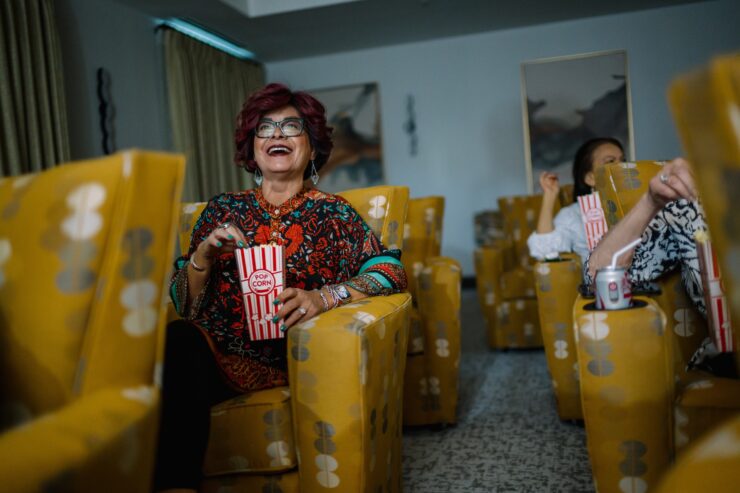
Luxury, boutique living reflects a growing shift in how older adults and families think about care, comfort, and daily experience. While the senior living industry offers a wide range of wonderful options…
Why private pay senior living offers more value than you think
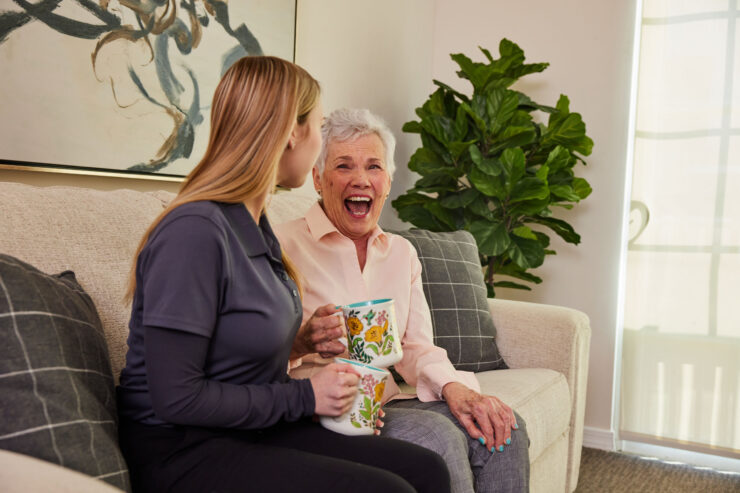
Listen here Many families begin their search assuming private-pay senior living is too expensive. That reaction is common, especially when you are comparing options or researching the cost of senior…

Heartfelt holidays: Easy recipes for seniors, lasting memories
With the holidays right around the corner, there can be a lot to prepare for. Whether it’s shopping for presents, decorating the house, or deciding whose house to go to for what, there is always something…